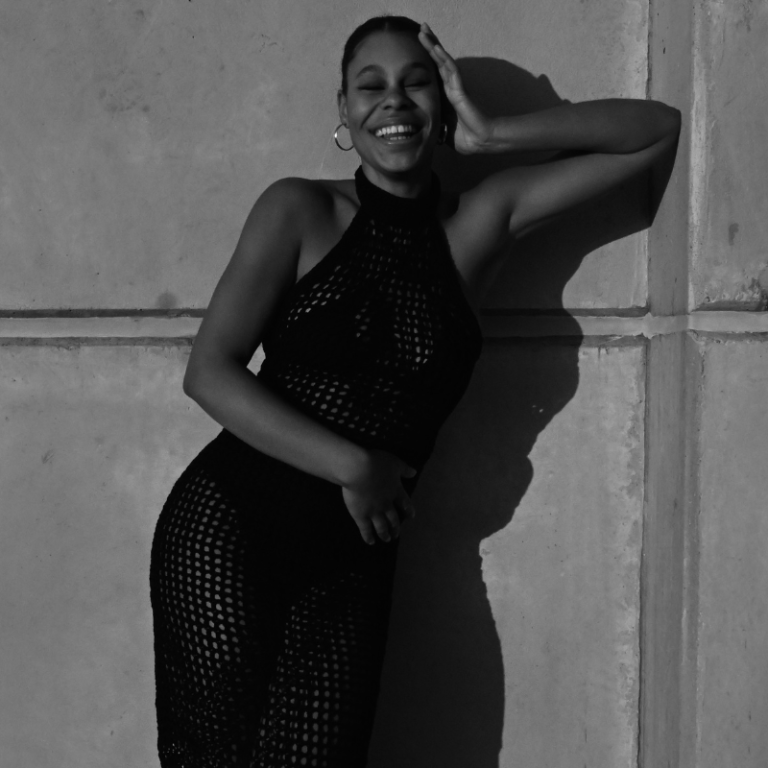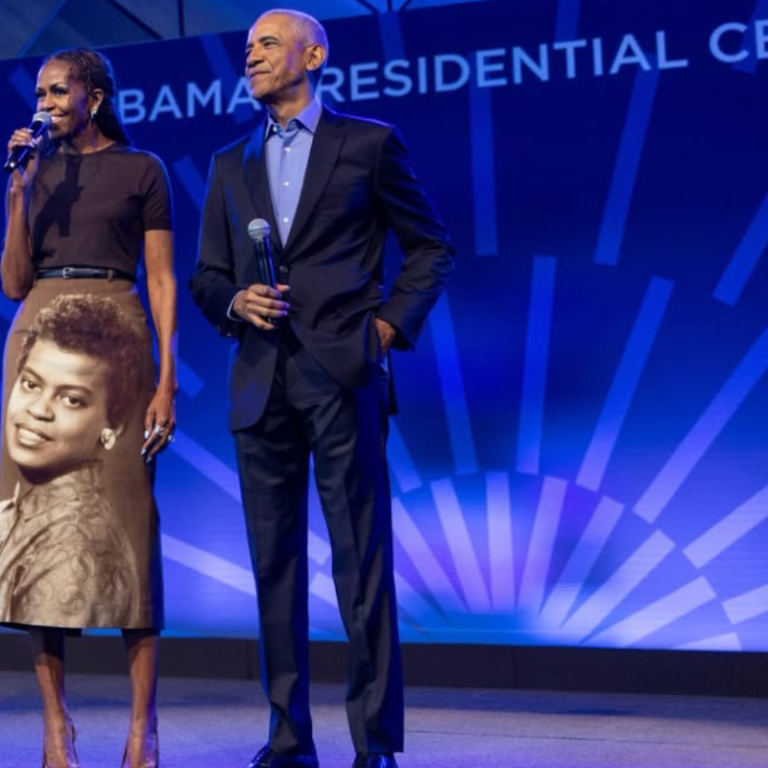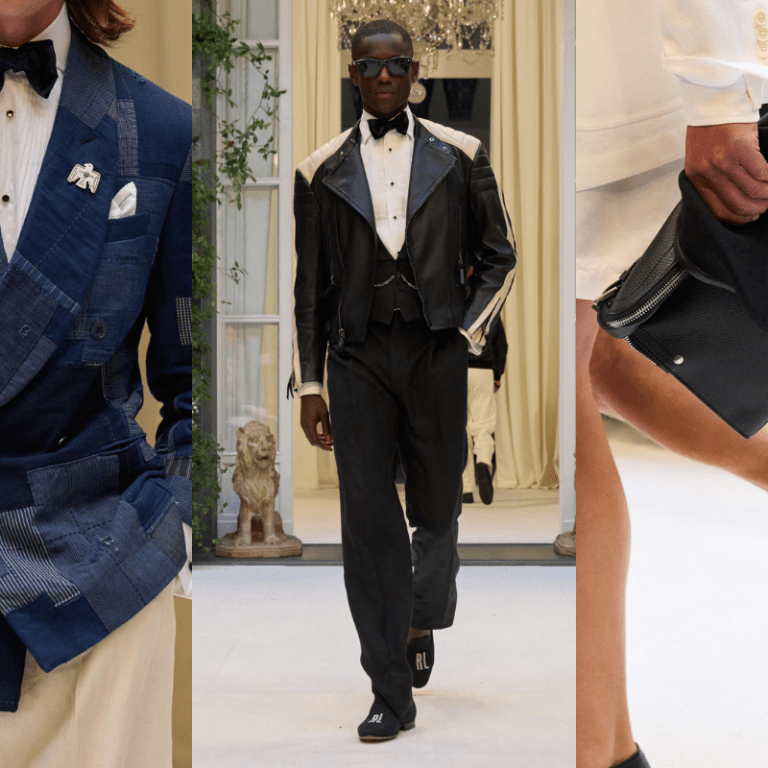

Paige Sias’s work draws inspiration from her community, history, and Louisiana upbringing. The fashion designer to watch spoke to NYOTA about refining her skills at RISD, mixing materials in her work, and her goals post-graduation.
Who or what initially sparked your interest in fashion design, and how can that influence be seen in your designs?
Growing up, I was always into the arts. Being from Louisiana, I feel like a lot of people want you to make art about Louisiana, but when you’re there, you’re like, why the hell am I making art about Louisiana? For a long time, I resisted it. I started out as a painter in high school and, before college, only painted, but I have been sewing since I was 7 years old, mainly making clothes for myself. When I moved to Providence, I finally started thinking about home and the close-knit family I come from.
We all go to my grandma’s house on Sundays and eat dinner, and this shared memory is really important; it’s also common in Louisiana, and there’s a vibrancy to it. I’ve also been increasingly inspired by what I’ve seen growing up in my state and the potential in Louisiana. There’s a lot of negative conversation about the South, but there’s so much good there that I like to dive into in my work. There’s always going to be an active need for change and growth, but when you start to unpack some of these things, the histories within them, that’s what I find really special.
What programs and professors at RISD have best helped you cultivate your technical skills and unique design style?
I have been sewing since I was seven years old. I found my mom’s sewing kit, and I started sewing clothes for my dolls, and that was the start of it. My mom was like, “Do you want to keep doing piano, or do you want to learn how to sew?” I found a sewing teacher, and I was like, “No, I want to sew. I want to quit piano immediately.” So I’d been sewing for a long time at that point. I had some skills coming into the program, but honestly, home sewing is very different from going to a school with an apparel design program, using industrial-quality machines, and thinking about finishing and stuff. My professors had a lot of industry experience, and I worked with Meg DeCubellis, and she did a lot of work with technically getting pattern making, drafting, draping, and all of those skills that I didn’t have.
At RISD, I also took a lot of great classes. RISD doesn’t have traditional pre-reqs for their colleges, but I took a liberal arts class with Dr. Jameka Hartley on Black feminism. I found all the Black professors at RISD, and I was like, “I want to learn from you.” There was a Black film and theory class, and I would sit in that class and hear talks on Black motherhood, Black family, Black love, and start to deconstruct all of these things. I’ve thought about these things for a long time, but it felt different to do it in an educational format. I read this book in class, Bad Fat Black Girl by Sesali Bowen, and it was my favorite. It became the framework for a lot of the work I was doing. The book spoke to me in such a way and captured a lot of the feelings I had growing up in the South, growing up Black in the South; there are a lot of things that dive into that.
Do you feel it’s important for fashion designers to be multidisciplinary artists?
I do think it’s important. Design is changing in a way that anybody can be a designer, but I think the biggest part of being multidisciplinary is the thinking behind it. For me, I did a ton of research in high school. I was in a gifted program in high school. I was reading papers. I was writing exams. For a long time, I thought I was going to go to college for business, and then I decided, I’m just going to do art school. That was a big pivot for me.
RISD focuses a lot on interdisciplinary work. So my entire first year here, I was painting. I was drawing. I was building sculptures and huge things. That really shaped how I think about what more a garment can be. I can make a polo shirt. That’s easy. I can make a pair of jeans. I love making jeans. But how can I change what the garment can do? You start thinking about the details in all of these things a little deeper, not just the overall. And with painting, I can start playing with color. I can paint whatever I think in my worldview or paint the person in my garment. So I think being multidisciplinary is important, and getting a broader framework for what you’re working with.
To you personally, what does it mean to be intentional in the materials used in your designs?
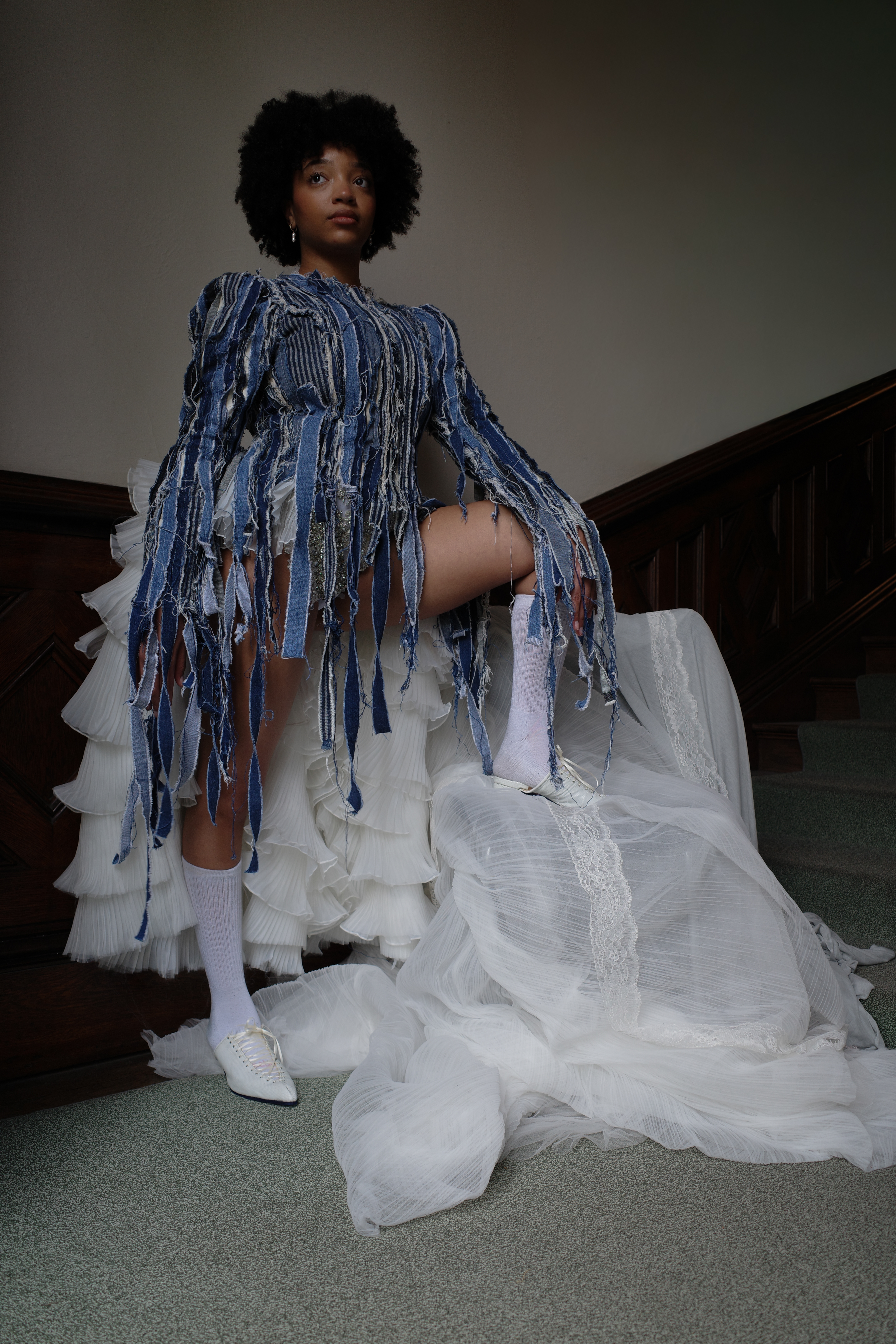
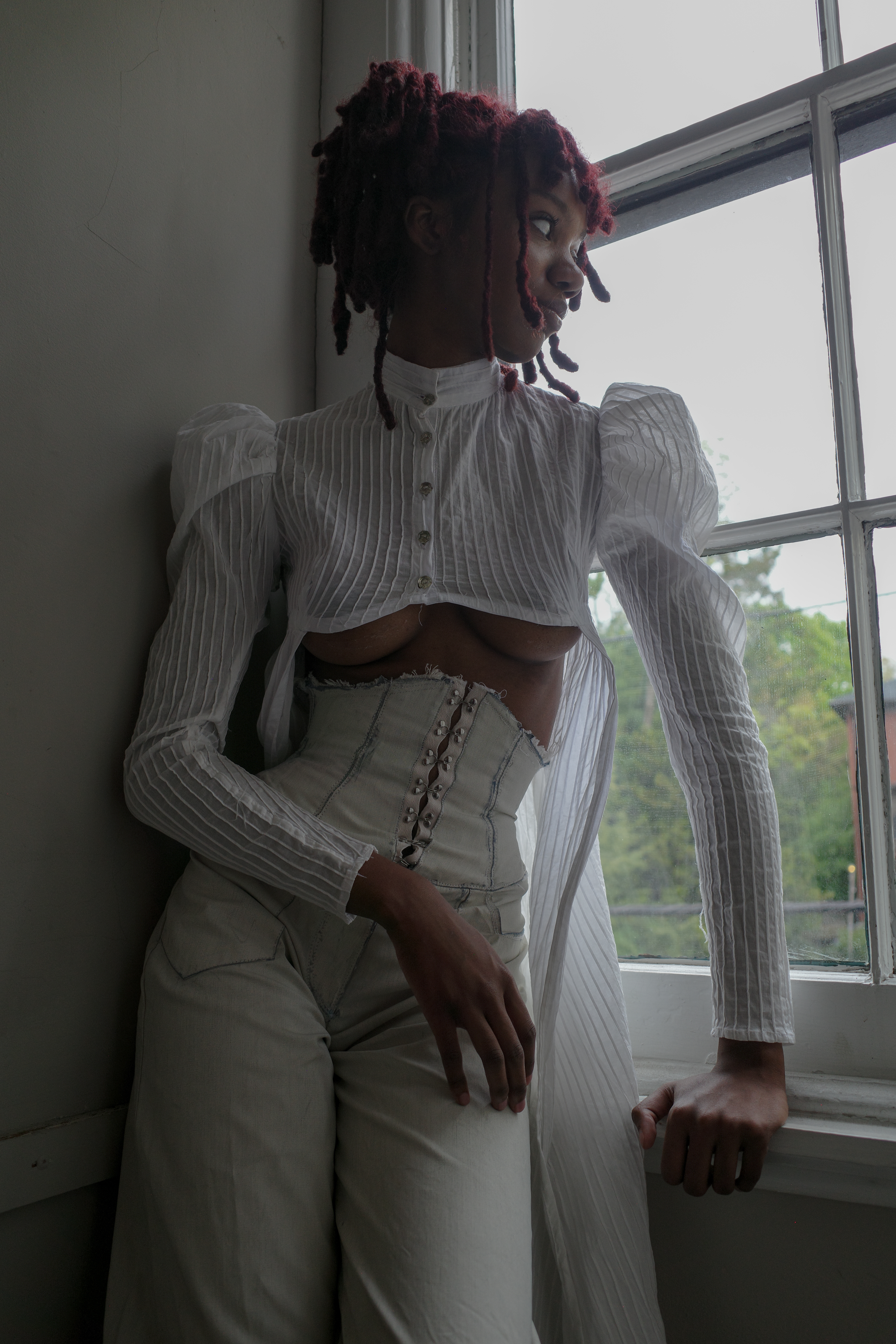
Denim is a new material that I started diving into. I never thought I would be a denim designer or someone who uses a ton of denim. I’ve always been a girly girl. I loved silk. I loved satins. I loved flowy fabrics. I loved making beautiful dresses, and that really resonated with me. With my recent collection, “Places I’ve Carried Things I’ve Been,” I was thinking about my family’s history in sugar cane farming. My grandfather and his brother started the sugar cane farming business around Four Corners, around all of Louisiana, really. You’ll just see tons of sugar cane fields, and I remember growing up and seeing them. But then also the context of family and work and labor and all of those things. Denim felt like a natural choice. I remember I’d always see my grandpa in jeans and a khaki work shirt, and it’s just really imbued in that culture. Also, it’s workwear material; it’s a fabric that can carry a ton of history.
Also, it’s a financial thing. I grew up low-income, and when I was going through my thesis, I saved a ton of money for it. A lot of the materials I did use were actually used. In one of my pieces, pretty much none of the materials are what they seem. In my collection, I found vintage material. I bought lots of jeans on eBay, old Lee jeans, and they were ugly and didn’t fit. But I bought them, kept them, stripped them, and put them together to make new textiles. It’s a pattern of sewing them together, and that’s where a lot of that came from. It naturally fell into place for me. And I think denim, and fabrics with a history in general, are just something that’s so special. I’m always talking about the history of the things that we’re wearing and the life of things that we love to be able to see, like, “Oh, I can tell that someone’s worn this garment,” or, “I can tell that they love this garment,” because you can see where it’s worn in.
What artist’s musical catalog best encapsulates the overall vibe of your creative lookbook?
Oh, geez. That’s hard. I listen to a little bit of everything. I don’t know if that captures my lookbook or the work I’m making. I love Etta James. I love Aretha Franklin’s work. Beyoncé is in there. All of her old stuff. I’ve always been a Beyoncé fan. I think I listened to all of Cowboy Carter when I was working on my clothing. I also listen to a lot of rap. There’s love, and there’s this elegance and maturity that I’m playing with. But there’s also a hardness. There’s almost a part of it that I feel when I’m working: taking something that may have been discarded, removing it, taking ideas of luxury, picking cheap materials, and then doing the work that makes them expensive.
One of the dresses is pretty much muslin and this corset-making fabric. It’s sheer. I think I spent 72 hours sewing the muslin onto the fabric, cutting it away, and then washing the dress. So the end result of the dress was, like, maybe 50 or 60 dollars’ worth of material, but the labor I put into it is actually the value. I don’t know. I listen to a lot of different musical artists. I’m always listening to something while I’m working.
In what ways do you believe you set yourself apart from other up-and-coming young designers?
I think this shared history, this research; I sit and think about the pieces I’m making for a long time. I stew on them. An idea will pop into my head, and I’ll sit, and I’ll work through it, and I’ll turn it over, and I’ll flip it around, and I’ll move through that imagined garment in my head. Then I’ll start working. I think every designer brings a unique perspective. Something that really helped me was having an amazing cohort of designers when I was working on my thesis, and we were all very different. You could look at the runway show and be like, “This is all coming from the same room?” It’s insane.
For me, the focus wasn’t necessarily on setting myself apart, but on emphasizing the skills I do have. I know that I’m detail-oriented. I know I can sew like nobody’s business. And I know that my work has strong concepts. So it’s been something that I’ve really dived into. I don’t take anything I do lightly. I know the history, the weight of it, and what’s important.
Also, I think the contemporary designers are just doing great stuff. I think it’s so fun to reference your peers, look at their work, and say, “This is insane.” Then I think, because I’ve always been a competitive person, “This person is doing something crazy. How do I push myself to do what’s crazy for me?”
What are the next steps for you and your creative work post-graduation?
Right now, I’m taking a break, just getting my footing and readjusting to living in Providence full-time. But in the next couple of years, I plan to start selling more of my work very soon. Hopefully, I’ll launch my website, where I’ll sell work and post my designs regularly. That’s going to happen very soon. So if people want jeans, let me know.
But in the next five years, I’m going to really start to carve out a space for myself in the industry. I think what was really important to me was seeing that the things that I’m making are things that I feel are missing in the industry: garments that fit multiple bodies, different-size models, Black models, the importance of Black designers and Black art, this history imbued in our garments, not just making stuff for a profit but telling the story with it. That’s something I found to be missing.
So I really hope to start carving space in the industry in the next five years, whether it’s Providence, whether it’s New York, whether I’m in Louisiana. Who knows where it’s going to take me? Really working through that, being happy over the next couple of years, and making a living doing something I love.