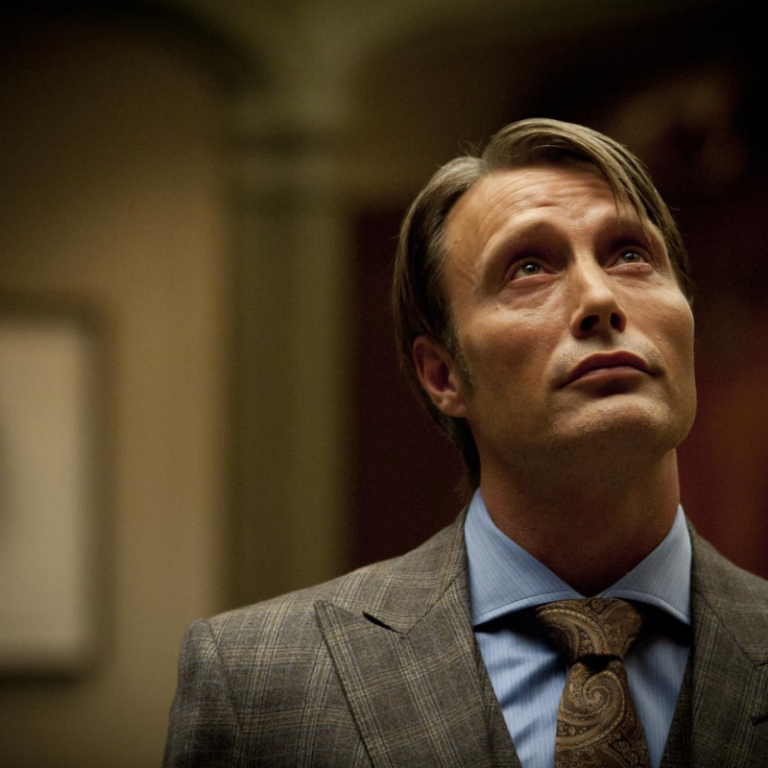

“Who are you? Who are you?” Mima Kirigoe’s voice reverberates through the speakers of her Macintosh. She sits motionless, her eyes fixated on a blog titled “Mima’s Room.” A voice recording of Mima practicing her lines for an upcoming television show echoes throughout her apartment. She’s also reeling from a letter bomb addressed to her a couple of hours prior. It’s here that she realizes someone is watching her, as evidenced by the blog, where mundane facets of her life which brand of milk she buys at the store, which foot she steps off on the train are detailed with such accuracy that she feels eyes peering at her even when no one’s around. As the soundtrack rises in volume, Mima’s voice escapes through her open balcony window and rings throughout the Tokyo skyline; she is no longer alone.
Five minutes into Satoshi Kon’s 1997 psychological thriller Perfect Blue, we enter a POV shot of a security guard holding his hand parallel to his eyes. Mima dances on stage alongside the rest of her idol group CHAM!. The guard is kneeling and positioning himself so it seems as if Mima is dancing in his palm. The film positions this guard, later revealed to be the irreverent stalker Me-Mania, as the driving force behind Mima’s worsening psychological state: he kills the screenwriter that writes Mima into performing a haunting assault scene; he buys every magazine showcasing Mima’s risqué photoshoot in order to protect her image; he vows to the ‘real Mima’ that he will kill the imposter that’s ruining her reputation. Who the ‘real Mima’ is is left for interpretation, as much of Kon’s surrealist narrative includes conflicting information that seems to indicate that Mima is several different people. On the one hand, she’s a Japanese idol who retired from music to pursue acting. On the other hand, she’s ‘The Real Mima,’ an apparition of her former idol self that eggs Me-Mania into violence while mentally abusing Mima throughout the film.
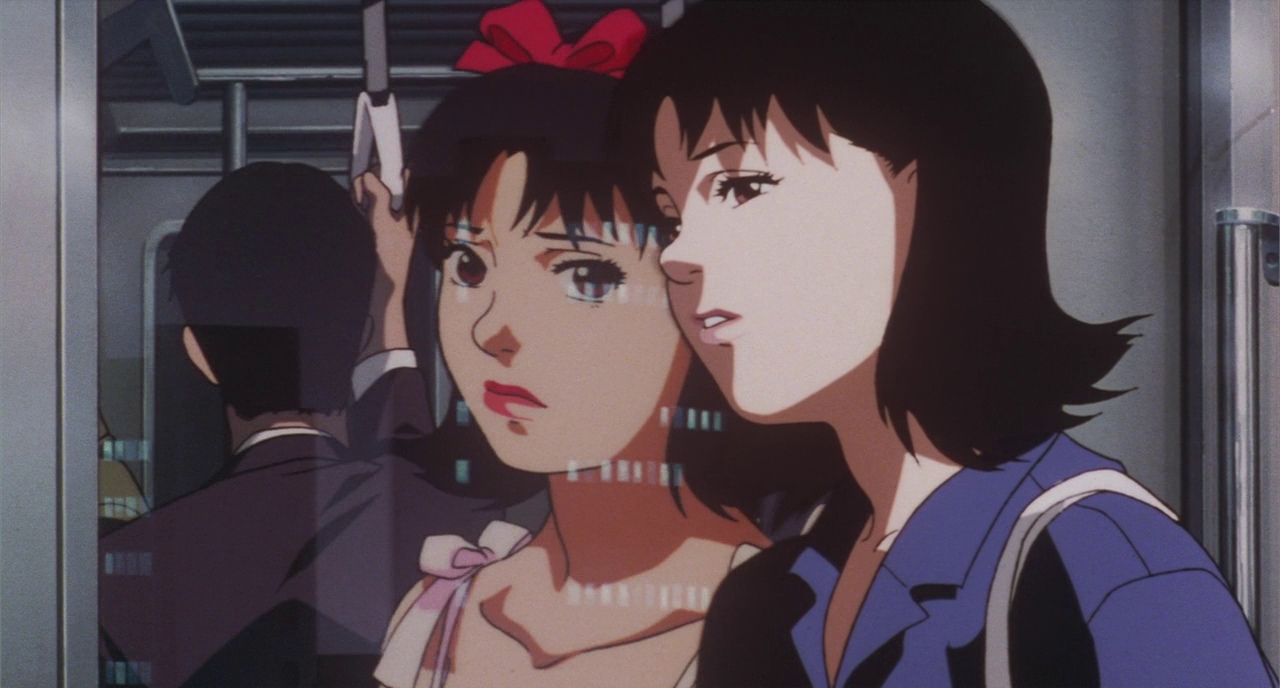
Perfect Blue is one of the earliest and most recognizable films that utilizes an abstract and surrealist narrative to interweave dialogue surrounding pop culture, beauty, idealism, and the internet. As the end of the 20th century ushered in an increasingly interconnected digital society, the idea of the persona became essential in the way we traverse through the online world. Time Magazine even named the internet user its Person of the Year in 2006. And since its release in 1997, Kon’s psychological thriller has only become more relevant, still reflecting the frustrations surrounding internet dependency and the psychological influence it can have on increasingly digitally dependent generations.
When psychoanalyst Carl Jung posited the idea of the “Persona” in his 1928 essay, the term had already been socially understood and largely performed by everyone born into modern society, even if no one had the psychological understanding to adequately describe it. It’s a mask that performs rather than explains, presenting oneself through a role that the collective psyche understands and expects. For example, a woman might want to feign a fragile, feminine facade in public, not because she is that, but because societal pressures influence her to perform a feminine face she otherwise might not possess.
We can see this through the online facades we inhabit through meticulous planning and self-curation. “Clean Girl,” “Alpha Males,” and “Trad Wife” are all working in accordance with an increasingly performative digital landscape, where labels need definition and identity is artificially manufactured. Mima’s personal identity in Perfect Blue can be viewed through a similar, commodified lens. As Mima fails to adhere to the image her agents have imposed on her, her transformation from innocent idol to hypersexual vixen reflects not only the exploitation of women in the entertainment industry but the struggle between the ‘real’ and the ‘ideal,’ as seen through the perspectives of both Mima and Me-Mania. This is not who she’s “supposed” to be.
Who Mima is and shouldn’t be is at the foundation of Perfect Blue, and it’s an idea that has a long-standing history throughout art and entertainment. The idea of the doppelgänger has long been a fascination among science fiction writers, horror writers, and philosophers alike. Early iterations of this idea can be seen in Robert Louis Stevenson’s seminal gothic novella Strange Case of Dr. Jekyll and Mr. Hyde and Oscar Wilde’s classic novel The Portrait of Dorian Gray, both of which surround a protagonist who gives in to temptation in exchange for their own morality. As film became an increasingly popular medium, filmmakers took it upon themselves to translate this moral dilemma in their works. Ingmar Bergman’s approach to perspective in Persona (1966) is grounded in the viewer’s ability to categorize nurse Alma (Bibi Andersson) and actress Elisabet Vogler (Liv Ullmann) as two distinct people or as one complete person. When Alma recounts Elisabet’s tumultuous pregnancy and subsequent motherhood towards the film’s dramatic finale, it suggests that both women are actually one person (despite Persona and Bergman himself never explicitly stating this), with each woman embodying the persona and shadow of the other. The exact details of the plot are left purposefully vague, as we’re witnessing the inner turmoil of our characters.
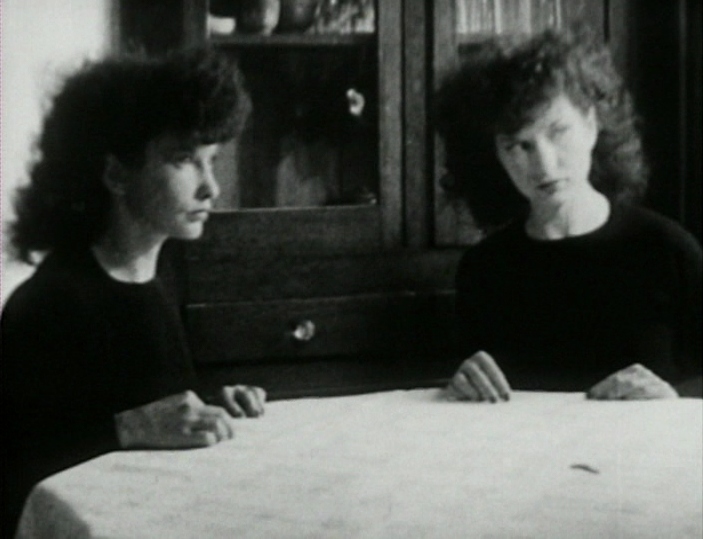
Similarly, Maya Deren’s influential experimental short film Meshes of the Afternoon (1943) explores many of the same ideas about personhood and perspective. The film shows a woman falling asleep on a couch and dreaming of a circular narrative in which she chases a hooded figure through her home. As the film progresses, Deren’s character begins to see the multiple versions of herself that she’s dreaming about at the same time. After a man (Alexandr Hackenschmied) wakes her up, the repeating sequence of events in her dream is revealed to have been actually happening. When Deren’s character realizes this man is the hooded figure, she can’t do much because the events of her dream already occurred. By the film’s end, she lies dead on the couch just like in her dream. The film frames this rotating chase sequence through the subjective experiences of Deren’s character. She is not tethered to any objective interpretation of what she’s experiencing. Instead, her character’s interior world is explored through the lens of her looping dream sequence. Through its dreamlike narrative structure, Deren’s character is at the mercy of her own anxieties and inhibitions rather than the external forces of the world around her.
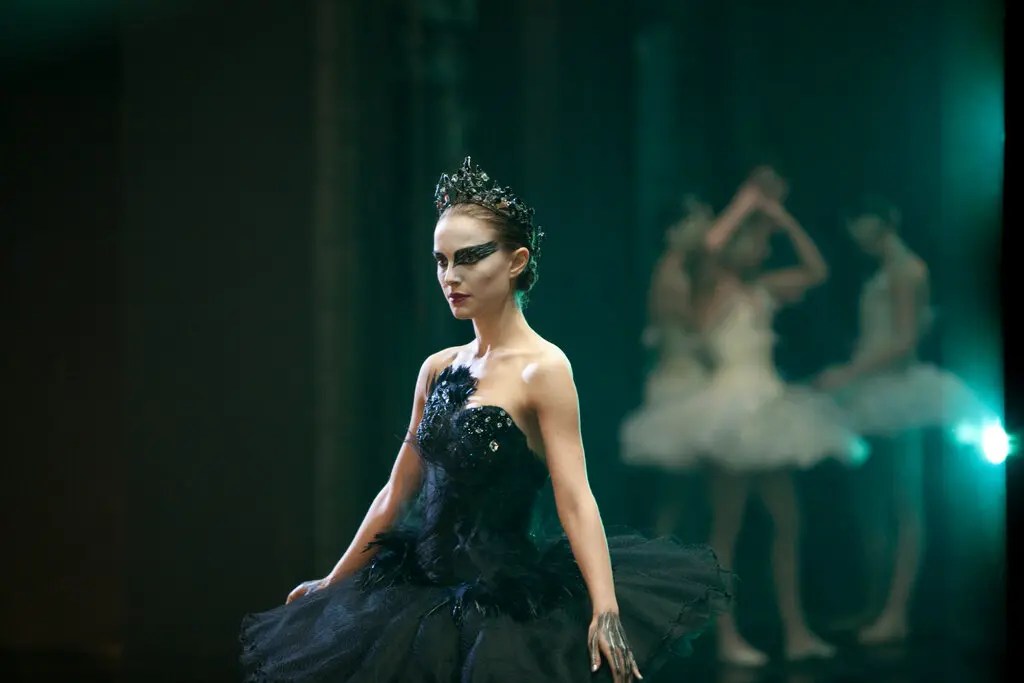
This crucial interpretation of subjectivity as the doppelgänger is what allows psychological and surrealist narratives to investigate the deep-rooted fears of isolation and imperfection. Black Swan (2010) is Darren Aronofsky’s take on the surreal, dream-like horror of both Perfect Blue and Persona through his own anxious and distorted lens. Nina Sayers (Natalie Portman) is a timid and meek ballerina competing for the titular white swan role in the New York City Ballet’s production of Tchaikovsky’s Swan Lake. In many ways, the film’s use of mirrors and apparitions recapitulates the overarching terror of the imposed persona. The anxieties and fears that worsen Nina’s mental health—the pressures put on her by her overprotective mother Erica (Barbara Hershey), the stress she puts on herself through her goal of utter perfection, the lingering idea that newcomer Lily (Mila Kunis) is attempting to steal her role—are conditions that could and do exist in our everyday lives. When Nina begins seeing an evil version of herself in the reflections of subway windows and rehearsal room mirrors, even as she walks the streets of New York, it isn’t the intangibility of a perfect Nina that’s haunting her but the idea of an intangible persona.
Much in the same way the ‘Real Mima’ reflects the idealized version of Mima in Perfect Blue, the opposite is true in Black Swan. Lily is the imperfect Nina—she makes mistakes, she drinks and goes clubbing on the weekends, she’s spontaneous in the decisions she makes, and her carefree attitude is what Nina is attempting to replicate. After failing to capture the essence of the black swan during her audition, Nina’s ambitions are torn asunder. “I just want to be perfect,” Nina mutters under her breath, begging artistic director Thomas Leroy (Vincent Cassel) to reconsider her for the role. “Perfection is not just about control,” he replies, “It’s also about letting go.”
Nina’s derealization lies not in her ability to maintain her imposed perfect image, but in completely altering its definition. Nina’s mother imposes a soft and innocent image onto Nina: her room dressed like that of a little girl; she clips her nails and brushes her hair even though Nina is in her early 20s; she has Nina’s door permanently unlocked despite being averse to any company. It is then, in the strictest sense, Erica’s relentless eye for the idealized Nina that lays the foundation for Nina’s personality and ultimately drives her towards her own self-destruction.
In the midst of Nina’s delirious state, there are subtle hints that Lily is also a figment of her imagination. While Lily is undoubtedly a real person, the events of the film, much like in Meshes of the Afternoon, transpire through the subjective view of Nina’s own insecurities. The narrative of the film couldn’t be viewed from any perspective other than Nina’s. When she kills Lily in her dressing room during the intermission of their final performance, she suddenly reappears minutes later, seemingly unaware of what Nina has just witnessed. Though the film structures Lily as our central antagonist, it’s Nina’s hyperallegiance to her own persona that ultimately kills her. She wants to be perfect, and by embracing the hedonistic and imperfect lifestyle of her counterpart, she seals her fate, succumbing to the idealized version she wants to be.
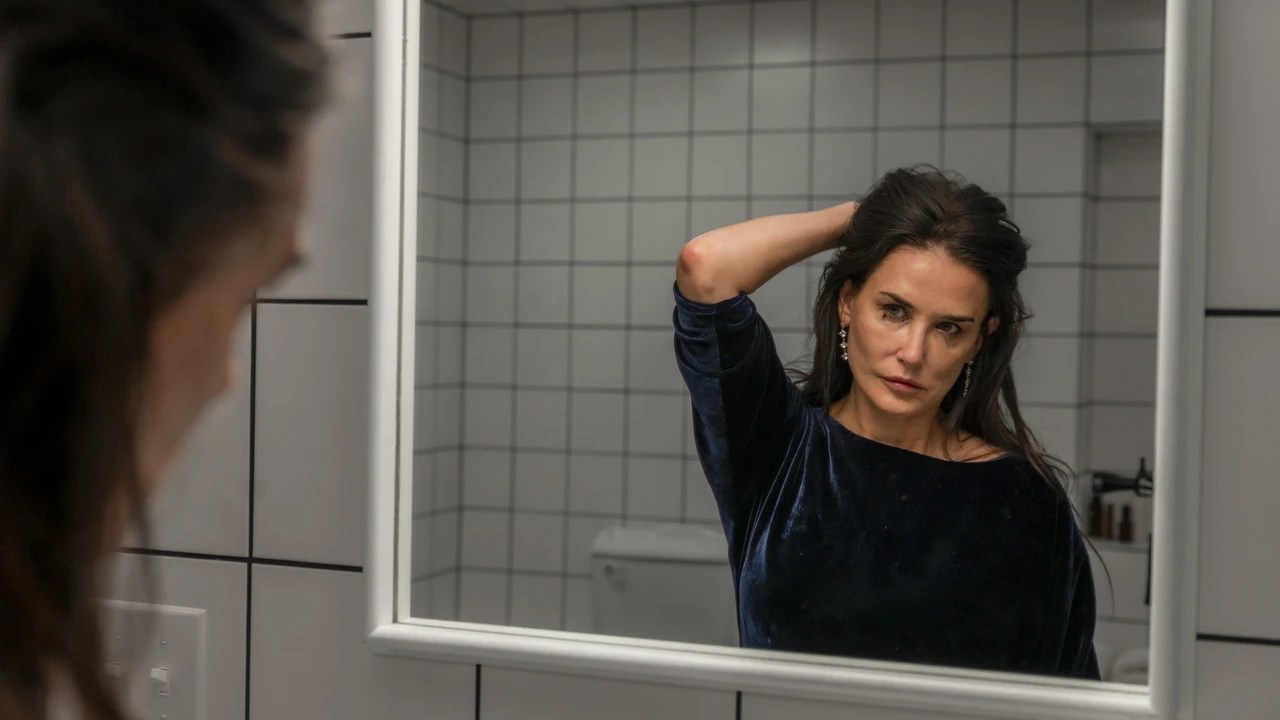
In Coralie Fargeat’s The Substance (2024), the idealized image manifests itself into a tangible reality. After being fired from her aerobic TV show, faded Hollywood celebrity Elisabeth Sparkle (Demi Moore) begins experimenting with a black market drug known as The Substance. It describes itself as a serum that duplicates your cells and creates a younger, more beautiful version of you. The two must take turns existing every seven days without exception, or else horrible consequences will ensue. Despite this newfound twisted lease on life, Sparkle can never get rid of her fear of aging. Played by Margaret Qualley, Sparkle’s younger doppelgänger Sue takes over her life: first becoming the host of her old aerobic TV show, then slowly enjoying an increasingly hedonistic lifestyle that Sparkle cannot participate in. Soon, their personalities split and resentment begins to fester between the two, culminating in a gory and disgusting bloodbath during a New Year’s Eve show.
It would be an understatement to suggest that the film gets straight to the point. Like the real-life body modifications that women undergo to retain their beauty, The Substance aims to examine and draw comparisons between Sparkle’s unfettered loyalty to Sue and the societal pressures placed on women to remain beautiful. Towards the midpoint of the film, Sue refuses to switch back, and Sparkle’s body is left rotting naked on her bathroom floor. Sue is inevitably forced to switch back, but the damage has been done. Sparkle has become a mutated hunchback, her bones stiff and protruding from her skin. Yet, she refuses to kill Sue. As she holds the termination needle over Sue’s chest, she peers over at a bouquet of roses with a notecard reading “They’re going to love you!” Facing directly towards Sparkle, a billboard with Sue’s face reads “New Year’s Eve Show Tonight 9 PM.” Her fate is sealed at the hands of Sue, the public, and herself.
The Substance is, at its simplest, a cautionary tale about the hyper-fixation on women’s bodies in an ever-increasing culture of online surveillance; The body is always at the forefront of online discourse. Most recently, Arianna Grande and Cynthia Erivo have been relentlessly examined for their drastic weight loss during their Wicked 2 press tour. ‘Heroin Chic,’ a 90s alternative fashion style characterized by incredibly thin profiles, sunken eyes, and pale skin, is potentially making a comeback. The Substance doesn’t say anything we don’t already know, but it says it so abrasively that we simply can’t look away.
However, it would be more accurate to consider Fargeat’s interpretation of the doppelgänger through the objective lens, the opposite of the unrelenting subjectivity of both Perfect Blue and Black Swan. The narrative of The Substance does not exist because of our protagonist; it exists because it has already happened to countless other people. At one point, Sparkle visits a diner where an old man warns her about The Substance. She notices the scar on his hand, the same one her young and beautiful doctor has during the film’s opening minutes. He drops his wallet, and she sees the incision on his back, the place where the duplicate first emerges, along with his membership card and unit number. There is a universal truth in what The Substance offers—everyone wants to stay youthful. Sparkle’s story isn’t specific to her; it has happened to others before and will continue to happen after the credits roll. But where The Substance succeeds in frightening and grossing viewers is in its ability to unite viewers with a universal fear—the fear of getting old.
The hauntings from these stories differ greatly from traditional horror and psychological thrillers. The doppelgänger posits an alternative reality where societal pressures manifest into physical beings that channel the individual perspectives of their protagonists. That isn’t to say that these types of films are depressing or difficult to understand. Mima’s descent into madness is an exhilarating roller coaster that twists and turns until coming to a liberatory end. Nina’s spiral is impossible to look away from due to its sheer ambition and spectacle. Sparkle’s transformation is gross and horrific in all the right ways. But peel back the curtains, and you’ll find detailed commentaries on the body, psyche, and the societal parameters that influence them.