
Every time I watch a movie or start a show about Gen Z, I’ve got my fingers crossed that I won’t have to look away from secondhand embarrassment. And I do think that the more a film or show tries to be Gen Z, the cringier it becomes.
When I think about Ginny & Georgia (2021-2025), or He’s All That (2021), I can’t help but shake my head and laugh. Do older people really think we act that way? Both projects are so bogged down in internet slang and influencer culture that it overshadows what could’ve been really interesting explorations of adolescence in the digital age. Works like these seem to think that the internet is the end-all be-all of Gen Z, mistaking a symptom of the generation for the generation itself.
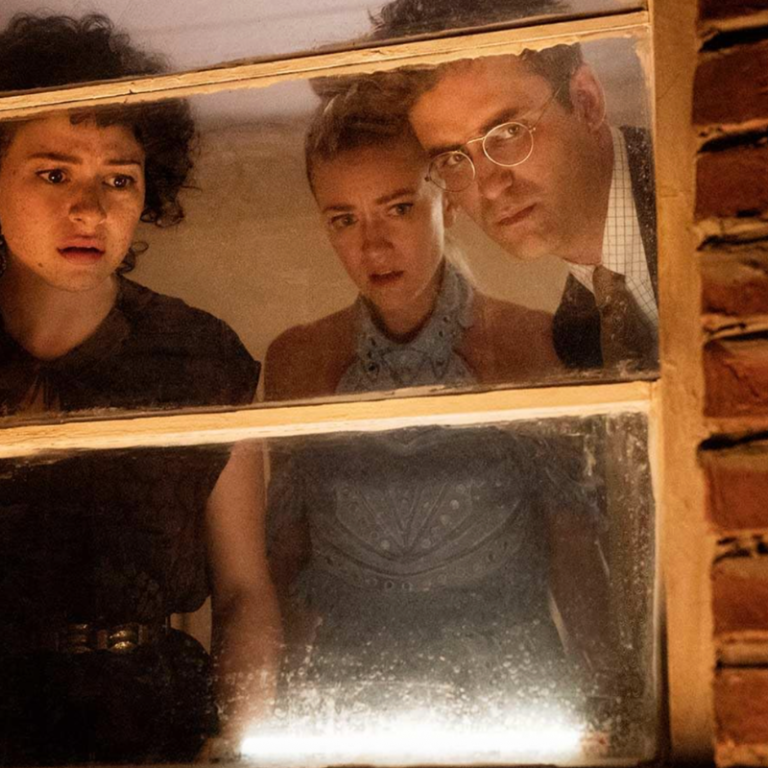
But I digress. There are still a handful of movies and shows that nailed it, getting recognition from Gen Z audiences themselves. This is especially true for comedy features such as Bodies, Bodies, Bodies (2022), Theater Camp (2023), and Do Revenge (2022). These movies’ success is not built on a timely TikTok reference, internet slang, or the most recent Snapchat filter. They succeed because they capture the generation’s mindset and worldview: its anxieties, humor, relationships, and contradictions.
Bodies Bodies Bodies and the Performance of Identity
On the surface, Gen Z seems like a performative generation, what with all the self-branding and curating we do online. “Bad” movies only get to this point, taking at face value that Gen Z is just a patchwork of online slang and identity labels. As a result, their attempts at authenticity often come across cringe, while their satire falls flat.
Bodies Bodies Bodies (2022) understands that this is only one side of the contradiction that defines the generation. This movie makes fun of Gen Z’s performative nature by understanding that it’s performative—that’s the joke. Throughout the movie, the characters feign emotional intelligence, political awareness, and empathy through their language and behavior, casually throwing therapy talk buzzwords like “boundaries” and “gaslighting.” But the movie isn’t mocking progressive values or mental health awareness, nor is it a piece of activist filmmaking. It simply understands that there’s a gap between performing maturity and practicing it; that contradiction is what the film satirizes so well.
Throughout the movie, the characters turn on each other, making jabs that expose each other’s hypocrisies and just how acutely aware they are of how they’re perceived. And beneath all that facade, no one actually knows what they’re on about. One of the funniest scenes in the movie is when Jordan (Myha’la) and Alice (Rachel Sennott) have a spat that leads to the iconic line: “Your parents are upper. Middle. Class.” The argument quickly became a contest to claim who has the most moral authority and social conscience.
In retrospect, this isn’t that different from the “Oppression Olympics” fight in Ginny & Georgia. What differentiates it, apart from the film’s satirical tone, is that it feels lived-in. We’ve heard conversations like this in real life; we’ve probably even been a part of them once or twice. The satire feels like it’s coming from within the generation, mining its contradictions for comedy, rather than from an outsider’s caricature.
Bottoms and Theater Camp and the End of the Outsider
Teen movies have historically relied on old, rigid social hierarchies, treating queer kids and other so-called outsiders as supporting characters or comic relief, often reducing them to nothing more than stereotypes. What’s great about Bottoms (2023) and Theater Camp (2023) is that they understand there is a protagonist in everyone, without sanitizing them into the perfect role model.
Conventionally outsiders, these movies put queer teens and theater kids front and center as the main characters. But they are not above satire. These movies aren’t to preach progressivism; they simply normalize all identities while telling stories about flawed, chaotic, and human characters. Their “differentness” isn’t something that needs to be overcome; it’s just a part of who they are.
In Bottoms, PJ (Rachel Sennott) and Josie (Ayo Edebiri) are openly queer from the beginning; their sexuality isn’t something shocking or socially ostracizing, nor is it the reason we’re laughing at them. We’re laughing because their ruse of starting a fight club to impress their crushes is absolutely ridiculous, and because the way they react as their poor decisions snowball is genuinely hilarious. Despite its ludicrous premise, the film explores universally teenage motivations like overcompensating to hide your insecurities and making impulsive decisions.
Theater Camp, while existing in a whole other universe, shares the same approach. We’re dropped in the middle of a group of theater kids. This mockumentary feels like an affectionate satire. The movie’s format allows it to show us not only the melodrama of being in theater and poking fun at theater-kid tropes, but also the vulnerable side of these characters and how this art form is their way of self-expression and of creating their own family. The humor comes from a place of understanding instead of outsider mockery.
These two films make us laugh not because of the characters’ sexual identities or interests, but because they are messy characters whose flaws, insecurities, and bad decisions feel familiar. They also understand that meaningful representation isn’t tokenism or the presentation of marginalized characters as flawless, two-dimensional role models. It’s about giving these characters the same space to be complicated and human as everyone else.
Do Revenge and Growing Up Online
A lot of movies seem to think that social media is the punchline in Gen Z’s lives. But in reality, social media and the internet are just one part of our lives. What makes Do Revenge (2022) so good is that it treats social media and the internet as an invisible force, an extension of the real world. It’s not only about sending dog-filtered Snapchats or filming TikTok dances in front of a ring light.
The movie kicks off when an intimate video of Drea Torres (Camila Mendes) and her boyfriend leaks online. What ensued was a story of reputation, gossip, and public image in the digital age. Phones and social media were never the focal point of an interaction or even the story; they were merely part of the ecosystem.
This highly stylized teen dark comedy uses technology to raise the stakes, but never lets it become a character. The film never focuses on the mechanics of social media; instead, it explores the changing social landscape. We see Drea and the other characters constantly calculating how they will be perceived and how cancel culture can spill beyond the digital space. Technology is simply a means to an end in the teenage social battlefield, much like landlines and the Burn Book in Mean Girls (2000).
Honorable Mentions: Shiva Baby (2020) and Booksmart (2019).