
Something delightfully charming is happening in advertising this holiday season. Amid the endless scroll of impossibly polished content, hyper-realistic product renders, and everyday AI-generated imagery, a different kind of campaign is starting to catch our attention. Stop-motion puppets, miniature Christmas sets, and behind-the-scenes glimpses of artists bringing an idea to life. What a concept! Art that looks like it was made by people.
As companies prepare for peak shopping season, festive marketing is dominating our feeds. Audiences are readying their wallets, stores are liquidating Q4 inventories, and creative teams are hustling for that elusive viral hit. Yet, in a landscape saturated with instant digital content, genuine human artistry remains the ultimate brand differentiator.
The result? A growing nationwide appetite for imperfection. Handcrafted storytelling is leading the charge. Think 1960s Rudolph the Red-nosed Reindeer, Santa Claus Is Comin’ to Town, Old snowmiser vs. heatmiser. Little can beat the wonderfully kitschy world of vintage holiday television. And during a season built around nostalgia, sentimentality, and all the Fa-la-la-la-las, what better time for brands to lean into the handmade? Sorry, beige Christmas, you will never win!
Brands Doing It Right: No prompts, Just Passion
One of the standout campaigns this season so far, and possibly my personal favorite, comes from Anthropologie. Created by artist Alina Golovlova and a team of designers, the charming animated short follows a young rabbit carrying a pincushion as she climbs a ladder and sews a star into the night sky.
It’s whimsical, imaginative, and beautifully tactile. Rather than relying on grand production or flashy visual effects, the campaign builds its magic through small details. The rabbit’s movements, the wind brushing her ears, the ornate star replicating the brand’s signature patches. The short feels less like an ad and more like a mini Christmas story.
I caught up with Alina (@so.daze) and got to peek into her creative world. Anthropologie first took notice after admiring her intricate embroidery work. From that spark, the artistic team shaped the narrative, transforming the original polar bear concept into a story of a delightfully stern rabbit. Behind those few seconds of Christmas magic was an intricate production involving five creatives, from the artists who sculpted the rabbit out of wool to the beading experts; Golovlova explains that stop-motion is full of technical challenges hidden behind moments that appear entirely effortless.
For Golovlova, the renewed interest in stop-motion is about more than nostalgia. Something inherently tender about the technique taps into what she describes as a “childlike, innocent part of us.” Perhaps, as adults navigating an increasingly technological world, we’re searching for a little of that warmth and familiarity.
To punctuate its brilliance, Anthropologie shared behind-the-scenes footage alongside the finished reel, allowing audiences to appreciate the creative process behind the final product. It invites them into the making of it, reminding us that sometimes the process is just as beautiful as the finished piece.
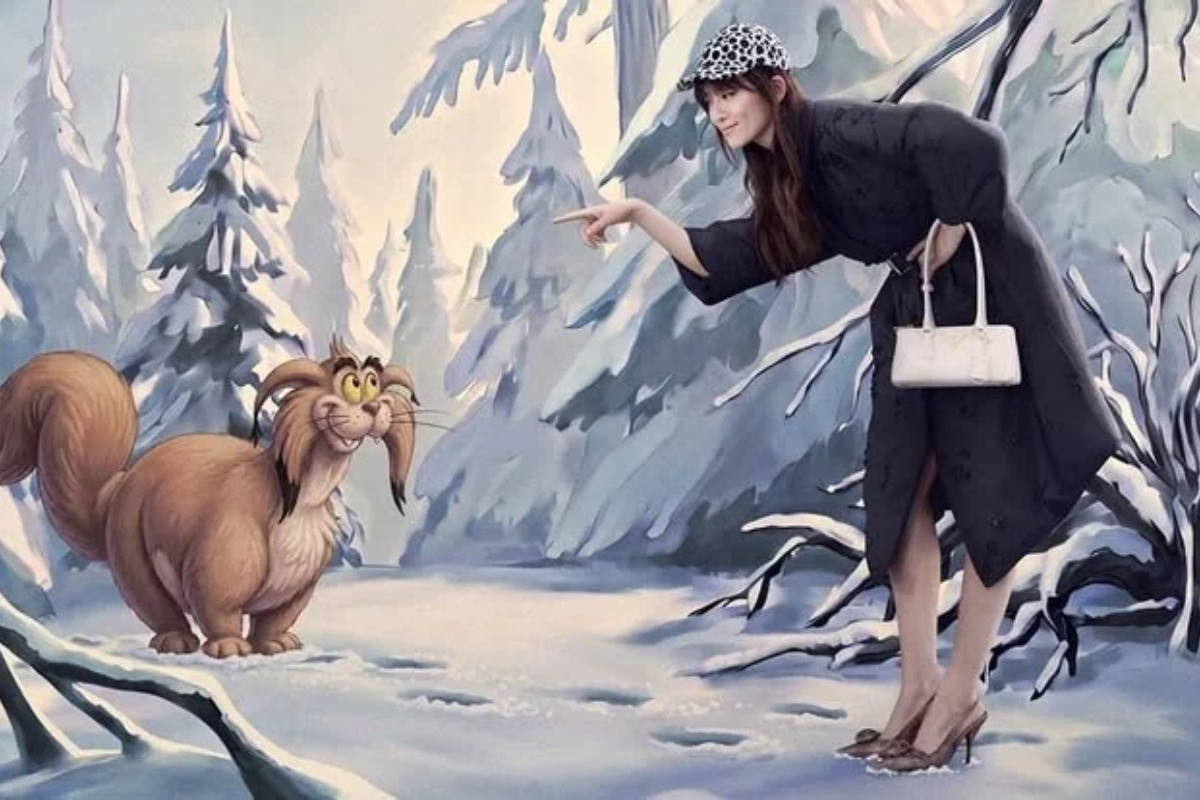
Prada took a slightly different approach this season, embracing mixed media and traditional animation to create a campaign that feels reminiscent of classic Disney films. Featuring Prada ambassadors such as Sadie Sink, Maya Hawke, and Chen Haoyu alongside animated foxes, hounds, and rabbits, the campaign truly hit the chic, nostalgic sweet spot. It’s a clever juxtaposition: a contemporary luxury house tapping into an artistic tradition that predates the digital-first advertising era. The result feels playful without losing its sense of sophistication.
Of course, not every brand trying to capitalize on this renewed appreciation for traditional artistry gets it right; enter Dior. The brand’s latest campaign, Night in Color, narrated by brand ambassador Robert Pattinson, has sparked a rather different conversation. Presented with seemingly hand-drawn illustrations, the advertisement appeared to tap into the same nostalgia-driven visual language that has resonated with audiences far and wide. But instead of accumulating that same praise, the campaign found itself at the center of AI allegations. A red (and green) alert.
Viewers quickly pointed out details that seemed wacky and nonsensical: an unusual number of fingers, misspellings, and strangely rendered lazy eyes. All telltale signs of AI being used behind the scenes. Dior has maintained that the advertisement was created through an extensive artistic process, involving hundreds of hours and hands. However, without a compelling behind-the-scenes account of how the work came to be, the brand has struggled to convince a large portion of its audience. This, and similar incidents, have brought a new term into the cultural conversation: craftwashing. Queue the Etsy girl witch hunt.
A play on greenwashing, craftwashing is entering the mainstream as we become increasingly skeptical towards brands’ authenticity. Brands cannot simply borrow the visual language of human creativity and expect audiences to accept it at face value. Enter the behind-the-scenes teams that must accompany this increasingly rare example of human expression; Simply looking handmade is no longer enough. “I think transparency about the creative process is important,” Golovlova explains, referencing the recent Dior discussion. “If something is presented as entirely handmade, people should be able to trust that description…What matters to me is the intention, the creative vision, and the honesty behind the work.”
Interestingly, even the artists working in traditional animation aren’t necessarily taking an entirely oppositional stance. Golovlova sees AI as both a potential threat and a useful production tool. She welcomes its ability to simplify repetitive tasks such as clean-up and rig removal, freeing artists to spend more time on the creative process itself. Fully AI-generated imagery, however, raises more complicated questions around authorship and creative ownership.
Beyond the Holidays
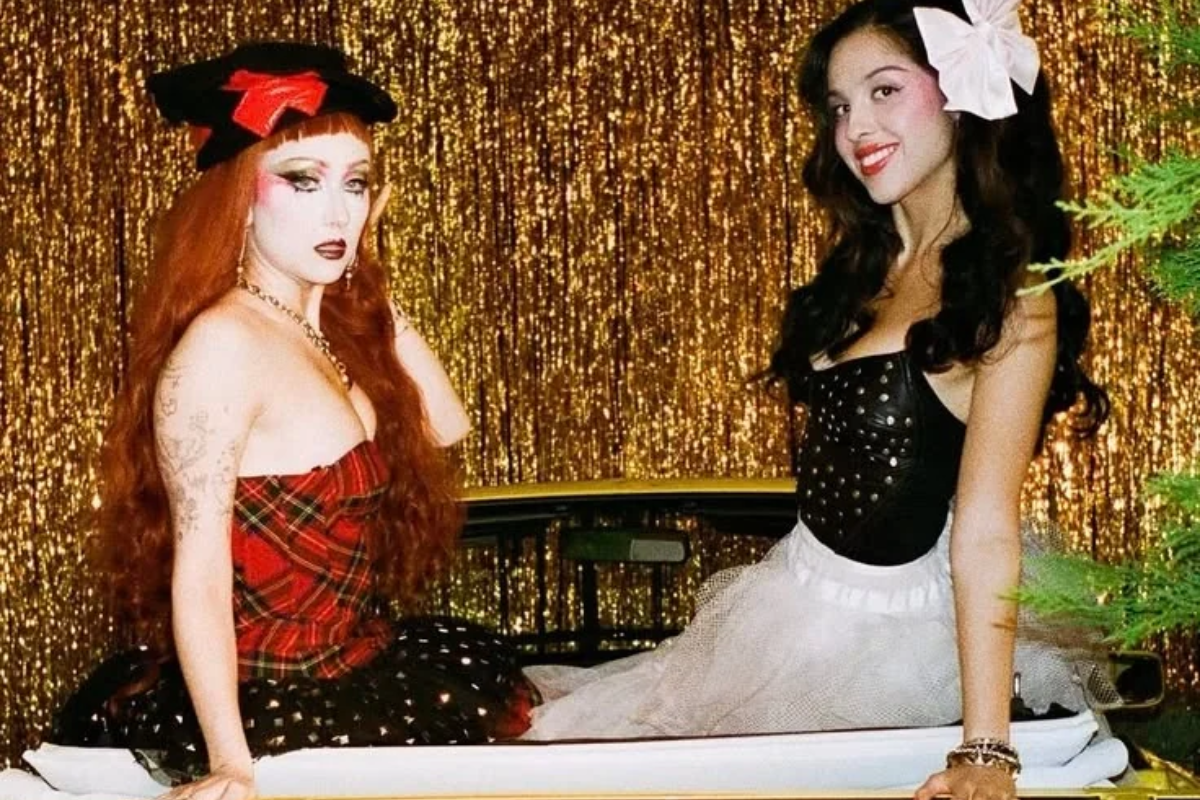
While the holidays provide the perfect backdrop and accelerate this return to traditional artistry, the movement extends beyond Christmas nostalgia. Examples can be seen in pop star Olivia Rodrigo’s creative direction during this era of her career. Visual experimentation and handmade aesthetics have become integral to her artistic identity. Like Dior, her music video for “expectations,” featuring Chappell Roan, sparked AI speculation, which behind-the-scenes footage later dispelled by giving audiences a closer look at the production process.
More broadly, Rodrigo has distinguished her creative identity through an ongoing commitment to playful, tactile, and handmade visual elements. From craft-inspired styling to collaborations with independent makers and Etsy vendors, her creative world feels intentionally personal. The appeal isn’t just visual. It’s cultural. Supporting individual makers, celebrating niche creative practices, and highlighting the people behind the work all contribute to a sense of authenticity that’s hard to manufacture.
LAIKA Studios also continues to maintain its standing in the world of stop-motion cinema. Wildwood, while not a box office smash, certainly garnered attention and respect for its painstaking creative work. In an era dominated by hyper-polished digital rendering, something remains undeniably mesmerizing about the painstaking nature of physical stop-motion. Each micro-adjustment of a miniature puppet reflects a thoughtful choice made by real hands. Every tiny set, hand-stitched costume, and miniature prop exists because an artist willed it into reality. The process is deliberately slow, deeply labor-intensive, and costly-and that is exactly why audiences are so captivated by it.
In a world of endless prompts, human creativity is becoming the ultimate differentiator. The holiday campaigns making the biggest impression this season are tapping into something much bigger than nostalgia. They’re responding to a cultural moment when audiences are reconsidering what creativity means and what makes something worth remembering.
The irony is difficult to ignore. At the very moment technology is making it easier than ever to create almost anything, brands are finding value in returning to techniques that require the most time, patience, and human involvement. Because when every brand can generate a perfectly polished Christmas wonderland, the one that builds a tiny set, hires an animator, and spends weeks bringing a little rabbit to life might just be the one we remember.
And maybe that’s the real luxury. Not perfection. Not production value. Not another impossible image. Just something genuinely made by someone, somewhere, who cared enough to make it.