
BookTok, Literary Trends and the Performance of Taste
As the seasons change and the sun now sets at 5 pm, I hunker down and begin my cozy critical hibernation. By which I mean, naturally, that I decide to start reading again. I begin with the usual rituals: a quick browse at Barnes & Noble, a scan of the shelves at Target, and an inventory of my supremely stocked TBR, which, despite its impressive size, seems destined to remain untouched. This time, however, I decided to try something different. I downloaded Kindle Unlimited.
Seems like a good deal, right? Some of the year’s most popular reader picks, scattered amongst a selection of fluff and similarly titled pieces, all for the price of one book. Sign me up. I swiftly download anything that catches my eye and tuck myself in for the night. What follows is several hours of giving books a chance, only to revoke said chance as quickly as I feel that familiar brush of ‘Ugh!’
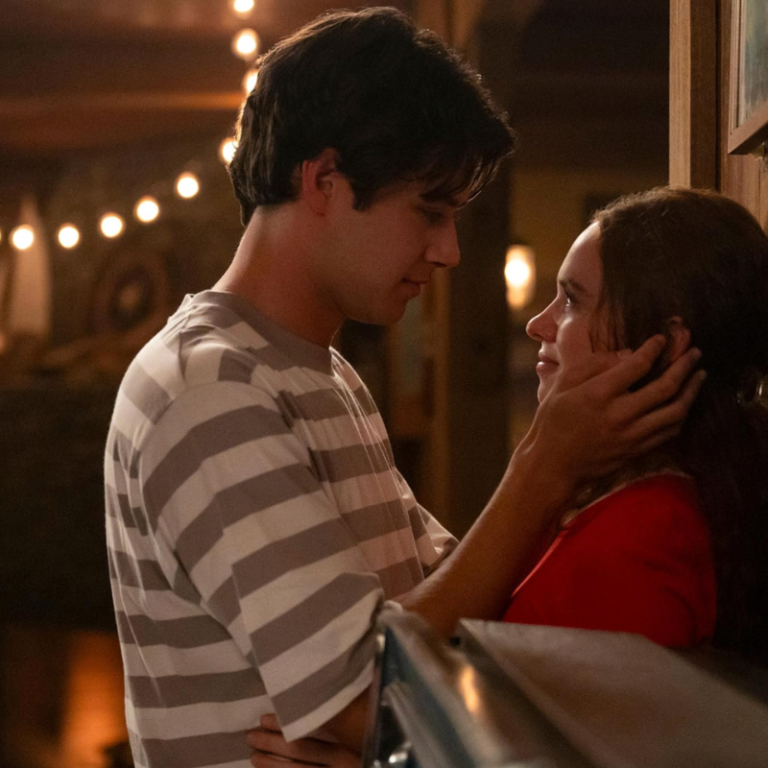
How can some of the season’s most popular books be so contrived? The morally gray man, the academy setting, the found family, the enemies who are inevitably lovers. Is anything character-driven anymore? And don’t get me started on the cartoon covers that have become visually synonymous with romance. A small sidenote: when will the next trendy sport take charge? I am especially tired of seeing ice rinks littering the backgrounds of the smut section. Err, I mean romance. Tennis, anyone?
It is as though I am reading the author’s outline: an idea stitched to a trope, glued to a familiar character archetype, mashed together in a bowl, then topped off with a love interest so brooding and predictable I can hardly stomach it. Is this what awaits me at the end of the night? Perhaps I will resort to doomscrolling after all. It feels spiritually much the same.
But my frustration points towards something more interesting than a personal aversion to a particular genre. Books are beginning to resemble seasonal fashion collections. There is a recognizable aesthetic, a formula, a trend cycle, and an increasingly short window in which to capitalize on consumer interest.
In other words, literature is experiencing its own version of fast fashion, and all signs point to BookTok. We are not simply consuming stories, but indulging in microtrends, aesthetics, and increasingly, identities. Somewhere between the literary canon and the shelf, reading has become as much about how we are perceived as what we actually read.
The BookTok Effect: Reading, Personalized
The rise of BookTok has fundamentally changed the publishing and literary landscape. Where reading has historically been a solitary experience, this online community has made it feel increasingly social. And what is more fulfilling than finishing a book and immediately sharing the experience with like-minded readers worldwide? The enjoyment is multiplied tenfold, and sometimes, by ten thousand followers.
On top of that, we live in an age of hyper-personalized consumption. Spotify Wrapped, Instagram Explore, and the seemingly infinite For You page have made it possible to curate almost every aspect of our entertainment. Everything is constructed to feel as though it was made just for us. BookTok is both a product of this environment and an accelerant. As a result, rather than discovering something unfamiliar, we are increasingly encouraged to consume more of what we already know we like.
With that in mind, BookTok and its many favors don’t necessarily reward the best book. It rewards the book that is easiest to sell, aestheticize, and replicate. A story that can be condensed into a thirty-second video, paired with a trending sound and sold through the promise of a very specific emotional experience has a clear advantage. The more easily a book can be packaged into an online identity, the easier it becomes to market.
Writing for the Algorithm
Like many young readers turned twenty-somethings, I realized that I am, in many ways, an amalgamation of the characters I have encountered in books. I have consumed them quite literally. Their decisions, relationships, flaws, and contradictions have all shaped how I understand the world. And yet, in this current bookish space, I fear character has increasingly been sacrificed for trope.
The distinction matters; A morally gray character is not necessarily an interesting one. A strong female protagonist does not become compelling simply because she can wield a sword or deliver a particularly sharp one-liner. A romance isn’t automatically emotionally resonant just because it follows a prescribed sequence of yearning, conflict, and reconciliation. A trope can introduce us to a story, but it cannot substitute for one.
That said, I decided to get a second opinion from someone with more scope than I do on bookish anatomy. I reached out to Dana Alsamsam (@Danas__day) on TikTok, a book editor and content creator, regarding the distinction between familiar literary conventions and formulaic storytelling. From an editorial perspective, she argues that tropes are not inherently detrimental to originality. In fact, they serve an important commercial function, helping readers identify the kinds of stories they enjoy. The problem arises when familiarity becomes the entire premise, and, as readers, we fundamentally narrow our curiosity.
“When familiarity becomes the primary selling point, we risk treating literature as a product to be replicated rather than an art form to be explored. And a carbon copy does not great literature make,” she explains. Her approach to editing is not to discourage authors from using familiar conventions, but to encourage them to find something absolutely distinctive within them. “I’ll always push authors to get weirder, to lean into exactly who they and only they can be, to tell the story in the way only they can.”
But how much of this formulaic storytelling can be attributed to the growing influence of socials? Dana acknowledges that authors are becoming increasingly conscious of the algorithm, particularly as prospective writers are encouraged to cultivate an online following to secure readership and commercial success. The danger is not then found in authors utilizing familiar conventions, as that has been common practice since the dawn of time, but that marketing begins to dictate the creative process rather than the other way around. Dana describes social media as a “semi-necessary evil” in the literature space, but insists that writers should never compromise their creative vision simply to fit in the most marketing-friendly box.
“Writing purely to satisfy the algorithm doesn’t feel like a real artist’s work to me. But knowing how to use the algorithm after you’ve already written what is true and real and beautiful? That just sounds like a smart strategy.”
It is a noteworthy distinction. There is nothing wrong with wanting an audience for your hard work, nor with understanding the commercial realities of publishing. But there is a difference between writing something because it is true to your creative vision and inserting tropes because you know it will perform well online. In other words, the algorithm can help a book find its readers; it should not have a hand in writing the book for them.
The Literary Girl™ is No Saint
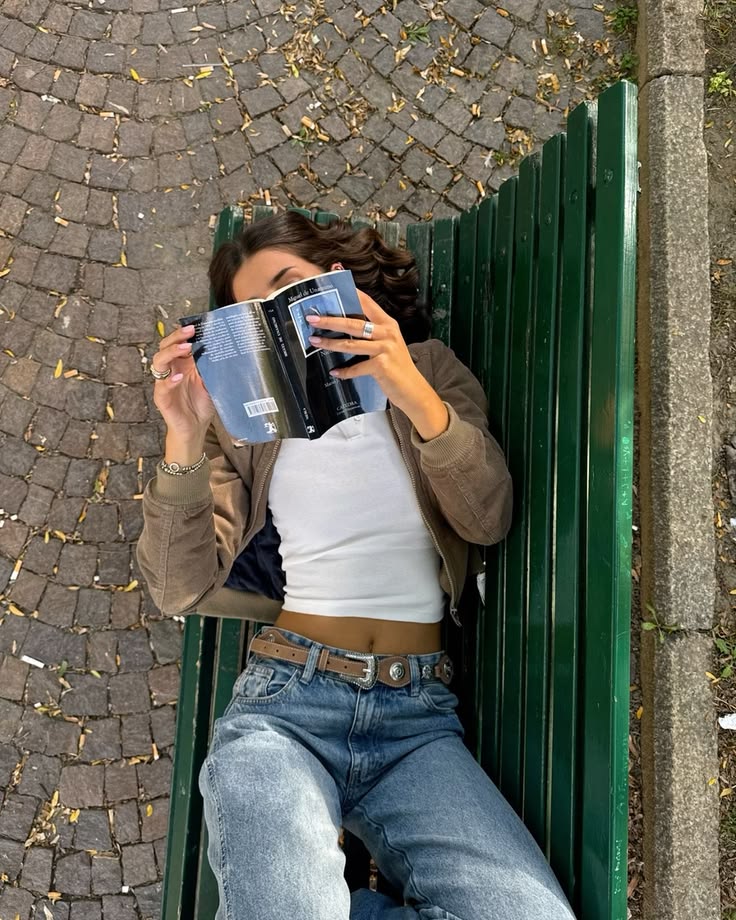
Before we wrap up, I fear I’ve placed myself amongst the equal and opposite stepsister to the BookTok smut consumer: the Literary Girl™ who assumes a position above other readers because she reads “better.” But let me be clear: both camps can be equally irritating. Reading for the aesthetic is just as vapid as reading for the spice.
Two forms of performance are at play here. The BookTok consumer reads what’s trending, participates in a shared online reading culture, collects the editions and sprayed edges, posts reviews, and engages in fandom. Sometimes, popularity becomes a proxy for quality. The Literary Girl™, on the other hand, reads critically acclaimed literature, using literary taste as a marker of intellectual distinction. Sometimes, obscurity or difficulty becomes a proxy for quality. Neither is immune to the desire for cultural validation.
It’s performance versus indulgence; pick your poison. The real issue isn’t what people read; it’s the need to construct an identity around being the right kind of reader and to judge those who oppose your mental stance.
In The Common Reader, Virginia Woolf describes the average reader as hasty, inaccurate, and superficial, adding that “his deficiencies as a critic are too obvious to be pointed out.” And while we’ve obviously evolved past the more direct markers of wealth, where book ownership itself signaled status, the division between the ‘good reader’ and the ‘bad reader’ has evolved in its own right. It’s Pinterest versus Instagram, TikTok versus Twitter, Substack versus everyone and everything. This illusion of removing oneself from the GA (general audience) for the sake of individuality is visible in every industry. When access to everything is constant, how do we make ourselves feel special? How do we distinguish ourselves in our respective careers, interests, and cultural circles?
Ultimately, the point isn’t to stop caring about what we consume, but to stop treating our consumption as evidence of who we are. But I digress.
Reading Without Apology
As some cynic on Twitter once said, “an idiot in motion will go further than a genius at rest.” Not every book needs to be a masterpiece, just as not every reader needs to be a critic. But we shouldn’t abandon the expectation that stories can challenge us, surprise us, and offer something we didn’t know we needed. Perhaps the publishing landscape has become increasingly standardized, but that may only make the exceptions all the more exciting. So, final thoughts?
Think critically about what you read, but read whatever you want without apology. Don’t mistake popularity for quality, or obscurity for merit. And, perhaps most importantly, invite your friends. Revive book clubs in the physical realm. In an increasingly performative reading culture, there is something wonderfully unpretentious about passing someone a book you loved and talking about it over a drink.
A personal recommendation and a genuine conversation, however rare, remain incomparable.