
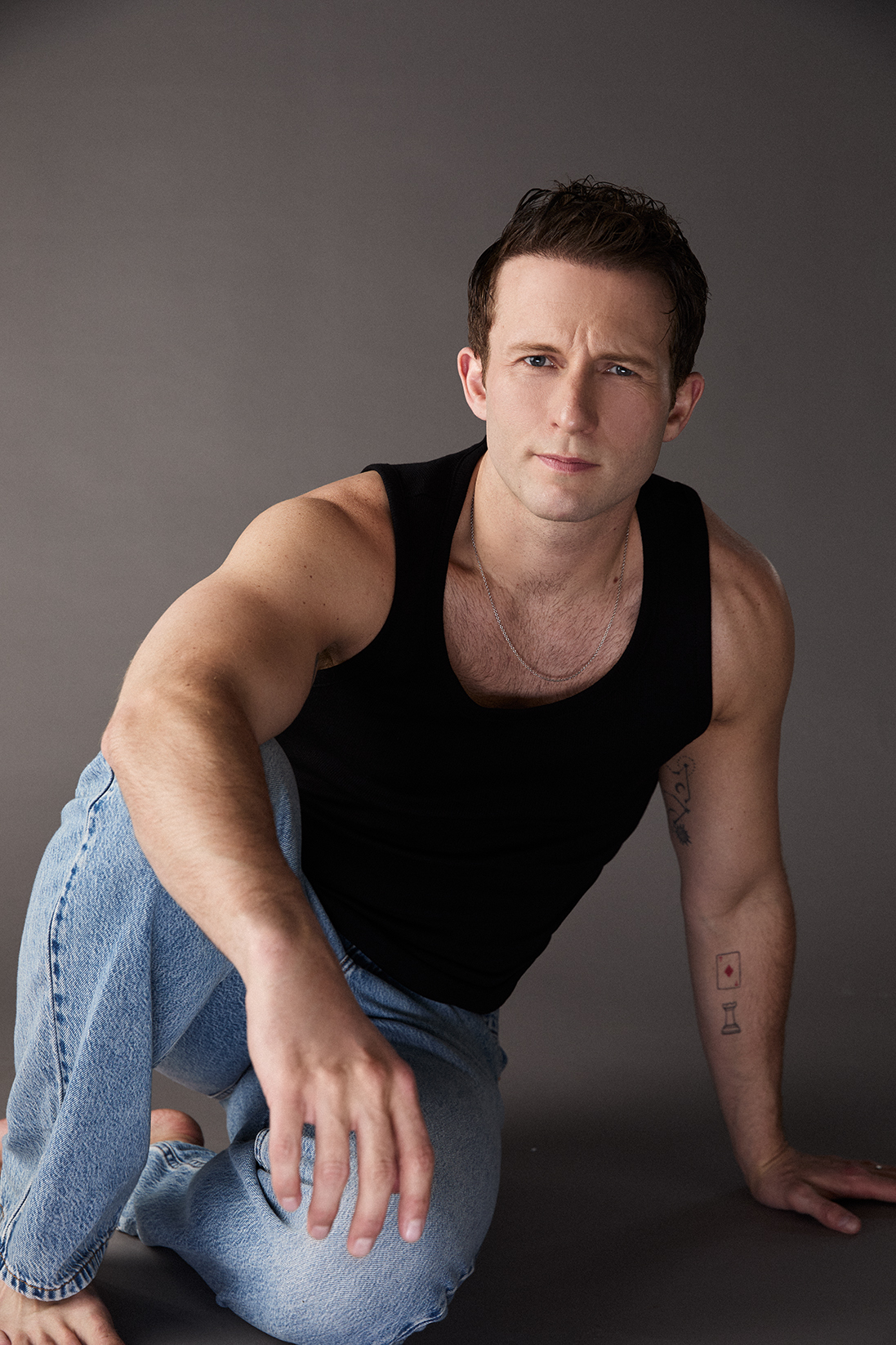
Joel Harper-Jackson has been in popular productions such as Cock and Daniel’s Husband and projects such as The Devil’s Hour and Daddy Issues. Now, he has stepped into the shoes of a legend, playing Frank Sinatra in SINATRA: THE MUSICAL. Harper-Jackson spoke to NYOTA about his research for the role, his advice for aspiring actors, and how his drama teacher inspired him to pursue acting.
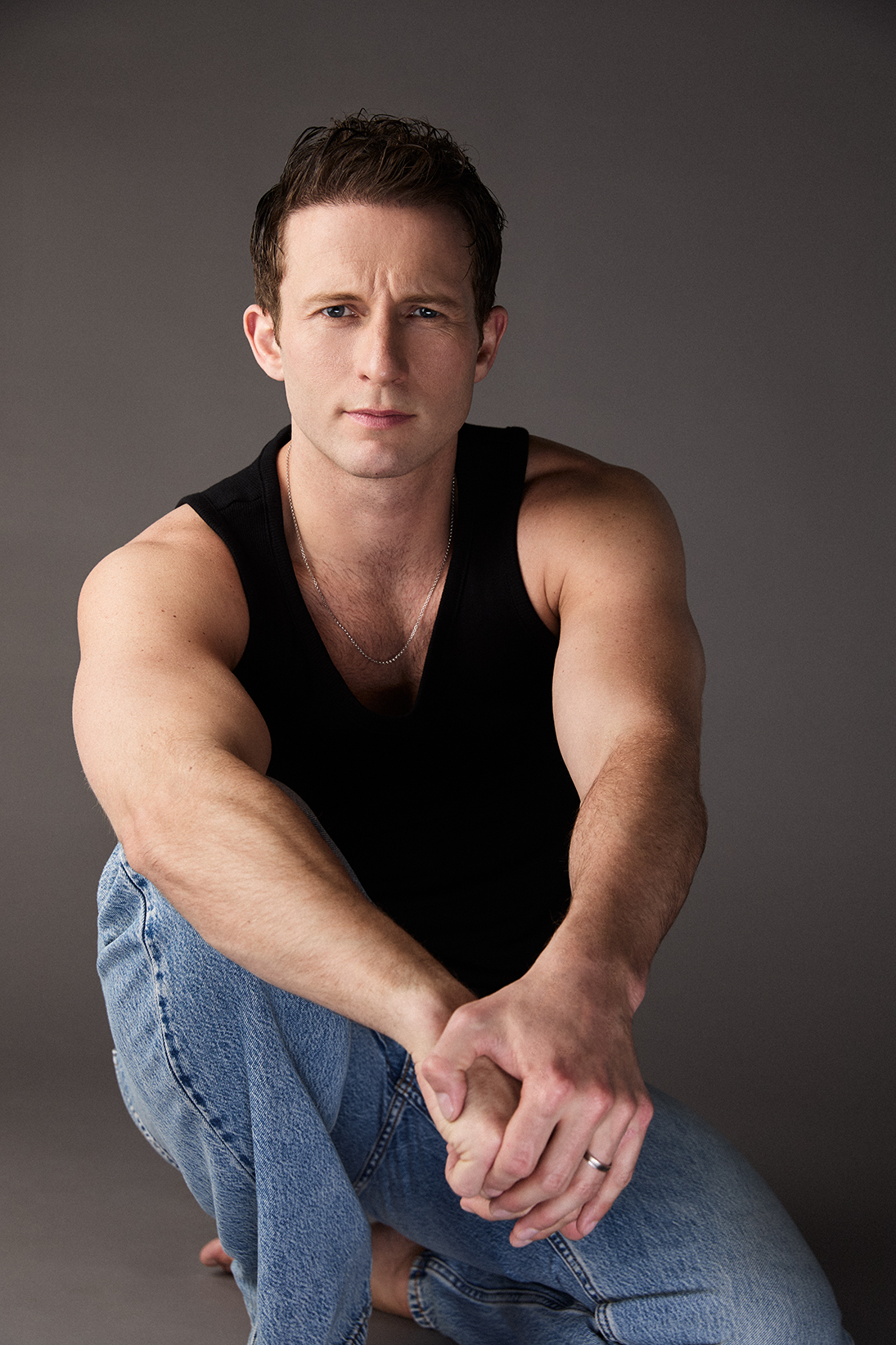
When did you first get bitten by the acting bug, and what led you to realize you wanted to pursue performing full-time?
Like many, I think my drama teacher, Mrs. Davis, was instrumental in my desire to become an actor. She organized a drama weekend away in Conwy when I was at school. There were only about eight of us, but I remember just loving it and it being one of the first things I fully threw myself into. When we got back, she told my parents: “After what I’ve seen this weekend, your son’s going to be a star. He just needs to keep going.” I’ve always remembered that. It was so formative and probably why I’ve never given up. She’s always supported me, always followed my career and seen everything I’ve done.
Teachers are incredible; the impact they can have on a child’s life can be monumental, and I’ll always be grateful to her for that. She also took us on a school trip to London to watch Blood Brothers, and afterward we did a workshop with Nikki Davies-Jones, who played Linda. I ended up doing my first professional job with Nikki, which was a really sweet full-circle moment.
What initially drew you to SINATRA: THE MUSICAL and made you want to audition?
David Grindrod, the casting director, compiled a list of actors they wanted to see for it. This doesn’t happen often, but they came to me first, which was very flattering, knowing that someone thought I could do it before I even thought that myself.
Playing Sinatra scared me at first. I questioned whether I could do it. That’s exactly why I wanted to do it. I think a lot of the time, the territory of fear is a wise one for an actor to be in. When it scares you, when you’re outside of your comfort zone, it pushes you to be the best artist you can be.
I loved his story and knew the trajectory of the show, so I knew it would be a challenge for me, and the more I scratched away at Frank and his story, the more I realized that there are many parallels between us on a personal level. After the audition process and after researching Frank more, I knew I could do it, so I became fixated on the idea in the best sense.
Sinatra is almost a mythical figure. What did your research reveal about him that most surprised you, and has it changed the way you’re playing him?
Frank did more in a week than most people do in their lifetime, so when it came to research, there was a lot to digest. However, although we don’t necessarily cover it in the show, what was interesting to discover was his political influence and how powerful he became in being so consistently at the top for so long.
Our show follows his early career decline into “the greatest comeback of all time,” as it’s so often described. What I love is that, yes, he is mythical and yes, he is a legend, but he’s also just a man. He’s complex, he’s flawed, he’s human, and he has so much heart and genius to offer. So, for me, I just have to focus on the human side of Frank; that he’s just another guy, because if I focus on the myth that is Frank Sinatra, then for me as an actor, that can get quite overwhelming.
Sinatra’s vocals are deeply embedded in popular culture, and audiences will arrive with very fixed ideas of what he sounds like. Are you doing an impression, or something else entirely, and how did you and the creative team decide where that line sits?
It’s a tough line to tread, because I understand as an audience member paying to see a Frank Sinatra show, you want to hear Frank Sinatra’s vocals. However, the creative team and Tina – Frank’s daughter, who is a member of the producing team – were adamant they didn’t want an impersonator because they knew Frank would hate that. So, I’ve had to find my own version of Frank Sinatra.
There’s only one Frank Sinatra, and I can only lean into him so much. Thankfully, the feedback I’ve had so far has been very positive. I’ve done my research, listening to Frank, Billie Holiday, who was a huge influence of his, and singers of around that time so I can contextualize my vocal, but it’s still very much my own version of Frank. The way I learned to sing was actually by imitation, so it was a really fun and interesting task to take on his vocal idiosyncrasies whilst also trying to retain Joel.
The musical opens on New Year’s Eve 1942, and Sinatra is about to perform at the Paramount and change the course of music history. That’s a very precise moment to drop an audience into. As a performer, what does it feel like to inhabit that kind of turning point before Sinatra becomes the icon he is known as today?
I would say, dropping in at that point in Sinatra’s career before it all kicks off slightly makes it easier for me as an actor because it’s a launching point. It’s his origin story; it’s before Frank Sinatra becomes Frank Sinatra. He’s at the start of his career with so much ahead of him. Starting the story at the very beginning and showing what came before he becomes the legend he was destined to become helps me to grow into his future, rather than having to come in from some random point. It’s a gift for an actor.
He is so loved and has such a loyal fanbase, so I feel such a duty to him and the weight of his fame on me daily, because they are overwhelmingly large shoes to fill. However, when those thoughts crop up, I do need to remind myself that his daughter chose me and gave me the seal of approval, and the creative team have trusted me with this. I can ease the pressure by reminding myself that I’m not supposed to “be” Frank Sinatra; it’s not about imitating him, it’s about finding his essence, his spirit and his soul, and hopefully I can deliver that.
Much of the drama rests on Frank’s heart being pulled between two very different women. How have you been building that chemistry with Ana Villafañe and Phoebe Panaretos in rehearsal?
Yes, it’s been a joy. It’s an incredible privilege to work with them and know these incredible people on and off stage. They are fiercely loyal and protective of their characters, and both hold them very close to their hearts. They’re both so different but match their characters wonderfully, and I feel so at ease working with them.
We’ve cultivated such a secure, respectful and creative working environment, which is integral when dealing with some of the challenging subject matter that we handle in the show. I feel so happy that they feel safe enough with me to access those emotional parts of the story, and that’s a huge honor.
It’s 2026, and audiences are hungry for a story about Frank Sinatra. Why do you think he still captivates, and what do you hope people feel/walk away with as they leave the Aldwych Theatre?
Ultimately, because I think he’s an incredible storyteller.
Universal Music is producing this, and they often tell us about the statistics on streaming. It’s incredible to know that the demographic who stream him most are the younger generation, and that, as an artist, he’s sustained such longevity when he’s no longer here. I think it was because he was himself; he was human, flawed, and made mistakes, but he’s also a gentleman in so many ways. I suppose if I was watching it, I would feel inspired, because in this story he doesn’t take no for an answer. He keeps on pursuing his dream with determination and grit, and is relentless in going after what he wants without stopping. I think if I watched that as an audience member, I’d come out of the theatre feeling like I could take on the world. Also, coming to the theatre with this band and set, it feels like you’re stepping back in time. It’s an outrageously classy production, and I think that will really excite audiences.
What advice do you have for aspiring performers?
Just like Frank, you have to be relentless. It’s extremely competitive, and there will be times when you are out of work, but you just have to keep on going and remember you’re doing it for the love of it.
Be kind to people, always.
Come to the table with ideas, have a vision, and be bold and exciting with your choices. Don’t play anything safely; safety doesn’t get recognition. Work hard and think outside the box.
Above all, do it because you love it. Don’t do it for anyone else, or fame, or validation, or money. Do it because you love it. That’s when you’ll produce your best work.