
Words by Grace Kinter
I’ll start by saying I was indeed a superfan of America’s Next Top Model in the late 2000s. Nothing got my heart racing more than seeing Tyra Banks holding one photo in her hand that would seal the fate of one of the two impressionable, exhausted, and hungry (literally and figuratively) models in front of her. I was such a fan that I made my friends “play” Top Model with me. We would execute copy-cat versions of the photoshoots and challenges with much lower stakes. We were posing with plastic spiders on our faces, we jumped off the couch to get mid-air shots, and we, of course, walked countless runways down the upstairs hallway in my mom’s oversized heels. We were about 9, and now there are some very embarrassing SIM cards buried deep in the drawers and closets of my childhood home.
Watching ANTM at such a young age, I was drawn to the creativity behind the photoshoots more than to the drama or scandal. I don’t even know if I processed a lot of what happened as a scandal. Sure, these contestants were pushed to the edge, put in danger, insulted, and humiliated, but that didn’t feel as abnormal to watch in a television landscape where The Jerry Springer Show and Maury existed. But it should have been different. This is not an article about how it was a “different time.” This is not me admitting that I am one of the people Tyra scapegoated in the revealing new Netflix documentary, Reality Check: America’s Next Top Model.
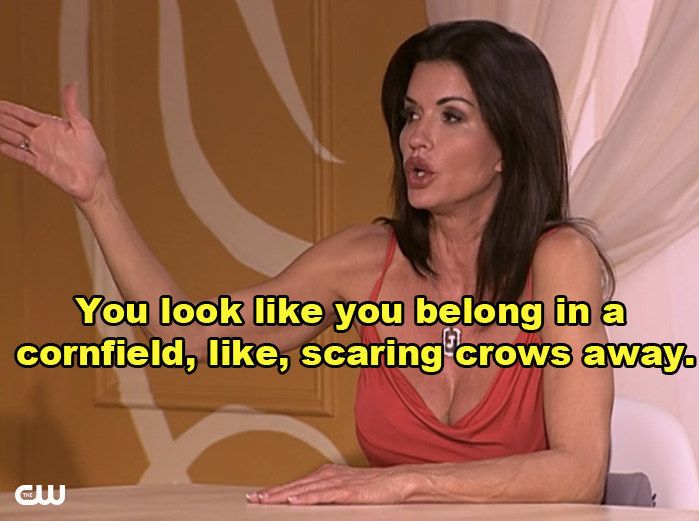
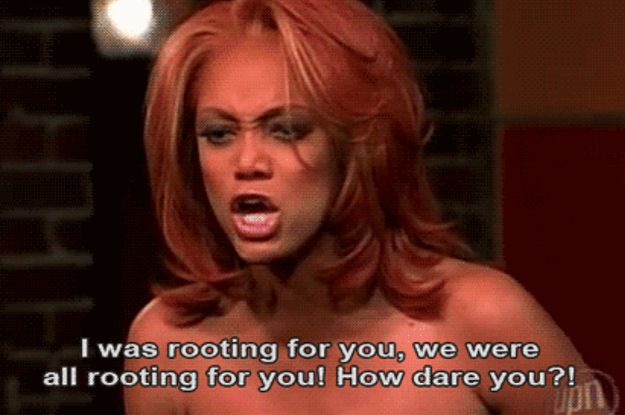
“You guys wanted it,” Tyra says, robotically. I may have been complicit in my 9-year-old body watching the hardships these models went through, but what can I say? I was 9. At the ripe age of 30, I hear Tyra saying, “You guys wanted it,” and I feel anger. Tyra wanted it. Because she wanted the views and the money and the momentum and the promise of a new season when her show was constantly on the chopping block to be cancelled unless they made it more outrageous, but she didn’t oblige for us; she did it for her own ego and success. If fans “wanted it” as she claims, we would have kept watching, but we didn’t. We eventually caught on, and views dropped drastically. Those earlier seasons became crystallized into culture, then thrown back on our screens during the pandemic. But by then, we saw those “viral” moments through a new lens and recognized them for what they really were: toxic and exploitative.
It would have been all too refreshing if Tyra Banks and production admitted the lengths they went to be successful on this documentary. But that isn’t the case. While Ken Mock, the main producer, admits one photoshoot he’d go back and do differently, and Tyra admits she’d say sorry to one contestant for a traumatic incident, the overall vibe is complete distance and avoidance. Regardless of the frustrating lack of accountability from the higher-ups, Reality Check sheds light on the contestants and their stories. I’m happy they got to tell their stories, especially because most of them, even the winners, got absolutely nothing they were promised after leaving the show. One can hope that participating in this documentary helped give some of these models closure, even if that closure was really just having the world finally be as shocked as they were at their treatment. Almost none of them model anymore, by the way.
We hear from Ebony, who knew who she was from the start: a gay Black woman from New York ready to conquer the world. But instead of being empowered and trained with dignity, she was called “ashy” by Tyra and the judges, made fun of during her hair appointment on makeover day, which resulted in a botched haircut from stylists who didn’t know how to handle Black hair with care, and was forced to come out as gay with no warning. We hear from Shandi, whose “cheating scandal” was actually sexual assault that was filmed and exploited. Shandi now works at an animal oasis, but her pain from the vicious exploitation of her trauma is written all over her face and body language as she recalls the complete lack of empathy following her assault. We hear from Danielle, winner of Season 6, who was given an ultimatum that she’d be sent home if she didn’t surgically fix the gap in her teeth, which she loved. She complied only for Tyra to, a few seasons later, give a model with straight teeth a gap because it was “back in style.” Danielle shared that despite winning, nobody would book her because of her relation to Top Model, and revealed a very disappointing conversation with Tyra years later, where Tyra essentially admitted throwing her to the wolves with no warning or help. “Being thrown to the wolves” was a very repetitive theme spoken about by the contestants, both on air and post-show.
Jay Manuel, Nigel Barker, and Jay Alexander aren’t getting off scot-free in my book because they also said and did some pretty nasty things during photoshoots and panels that were glossed over in the documentary. I think this “edit” is due to a few things. First off, Tyra comes off as enemy number 1, and the Jays, Nigel, and the contestants all have plenty of evidence to support that. Two, the Jays and Nigel were, too, eliminated dramatically from the series, therefore receiving the same type of bad treatment they allowed for many seasons. Maybe that caused them to do their healing and reflecting earlier. But it also gives them a more complicated role; they were both involved and burned from the chaos. The Jays and Nigel do come off more accountable than Tyra and producers, but I can’t say for certain that they aren’t just conveniently hiding, hoping their own skeletons don’t get pulled from the closet. At the end of the three-part documentary, it’s revealed that Jay Alexander had a stroke and can no longer walk, which certainly plucks at the heartstrings, considering his purpose in life was walking the runway. And no, Tyra didn’t visit him.
Overall, the documentary is as fascinating to watch as the show was back in the day, but it leaves a bad taste on the tongue. Will these contestants ever get justice, or is the lukewarm justice just them getting as far away from the modeling world as possible? Even weirder, Tyra, who had no creative control in the documentary, uses her screentime to plug a new season of Top Model where she’s back in the saddle. Will cycle 25 be Tyra’s accountability tour, or is it simply too late?