
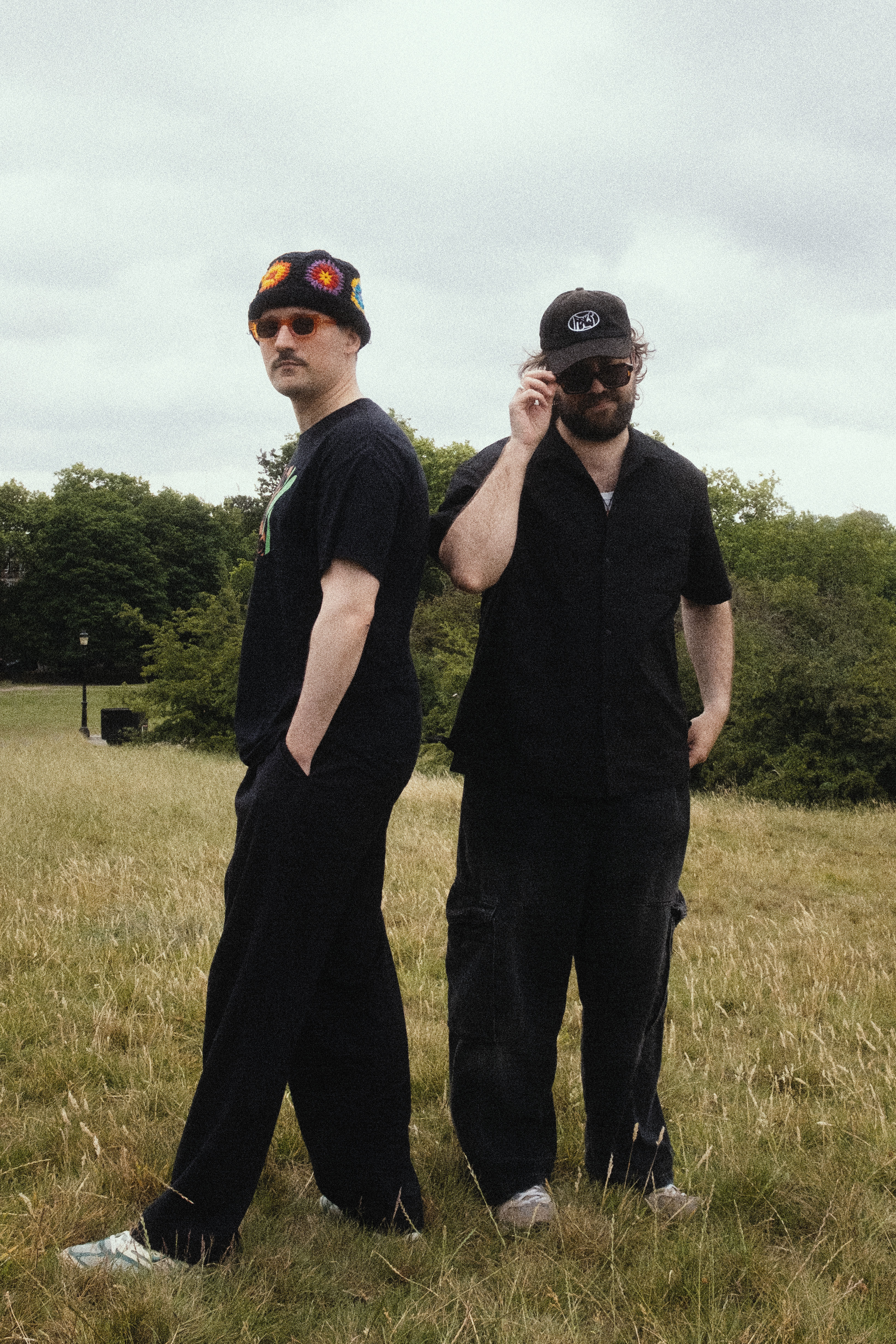
Instead of focusing on FOMO, Finnish producers Misha and cocabona are inviting us all to embrace JOMO (the Joy of Missing Out). The duo spoke to NYOTA about working on their project worldwide, the importance of slowing down, and offered advice for aspiring producers.
What were your individual journeys to discovering your passion for music?
Misha: My mom put me in children’s choir and piano lessons early on, so music was always around. But the first real spark came from MTV, especially Yo! MTV Raps. That show teleported me a million miles away from my surroundings and opened my world completely.
My true passion for music started when I discovered hip-hop. A friend played me Enter the Wu-Tang (36 Chambers) by Wu-Tang Clan when we were about 12. I remember thinking, ‘This is it, this is the vibe and attitude, forget all the rules.’ The Finnish hip-hop scene was growing fast at the time, and soon I found some incredible local acts that inspired me, too.
I started making little compositions on Music 2000 for PlayStation and recording my own raps. Producing came naturally after that; it was just part of shaping my own sound. Later, I fell in love with soul, funk, jazz, and disco. Over time, I began blending those genres together, and that’s when I realized I didn’t want to limit myself to one sound. I wanted to mix everything I loved and express myself freely.
cocabona: Music was always a big part of my life growing up. It was just part of the atmosphere at home. My mom would play piano for me and my brother, and our dad constantly had records spinning, everything from the Stray Cats to the Beastie Boys. That mix of sounds really shaped how I thought about music early on. When I was 11, I picked up a bass guitar, and not long after, we started our first punk band with our neighbor, who played drums. That experience opened the door for me to dive into all kinds of genres: metal, rock, blues, jazz, and funk. I was just soaking everything in. Later on, a friend introduced me to the music of Nujabes, and that was a turning point. His sound opened up a whole new world for me. It was soulful, melodic, and had this emotional depth that really stuck. That was my entry point into hip-hop, and it felt like a natural progression. That’s when I started getting into production, and it felt like everything I’d explored up until that point came together in a new way.
What’s your collaborative process when working on a song together versus a bigger project like an EP?
This was actually the first project we did together, which is kind of crazy because we’ve been working together for 10 years and have done dozens of singles. With an EP, there’s more intention behind it. We took time to really define the sound and find something that represented both of us. With singles, things happen faster. It’s more spontaneous. But the EP required a bigger vision, something cohesive that tied all the songs together.
The song “JOMO” ended up being the spark that led to the EP. What about the song and what it represented made you both realize there was a larger concept you wanted to explore?
“JOMO,” the Joy of Missing Out, came from a place of reflection. We live in this constant rush of creation, performance, and digital noise. The song became a reminder to slow down, be present, and find peace in stillness. When we finished it, it felt like more than just a song; it was a mindset. That realization made us want to build a full project around that theme: the balance between ambition and inner calm, between connection and solitude.
The EP is chock-full of collaborators. As you worked on the project, how did you start to decide who else to involve and help bring these songs to life?
It was really organic. Each song had its own emotional or sonic identity, and we asked ourselves, ‘Who would understand this feeling best?’ I’ve always believed in collaboration as a form of cultural dialogue, mixing perspectives from different backgrounds. This project was about connecting with people who share the same mindset and passion for music. Half the record came together remotely with production in Helsinki while vocals were recorded in New York (Relyae), Boston (Latrell James, ToriTori), London (Kadeem Tyrell, Amelia Rose), Amsterdam (Joya Mooi), and Copenhagen (Tamara Mneney). Each artist brought their own unique flavor, which made the EP really diverse.

You worked on the EP across the world, from New York to Amsterdam. Did you pull inspiration from the cities you were working in when putting the EP together?
Misha: Definitely. You can hear the influence of different places throughout the EP. We built the foundations for “JOMO” and “The Present” in London, and “All Day Long” started in New York. For me, creating in a new environment always shifts my mindset. Each city gives you a different kind of energy.
cocabona: Yeah, but also the equipment and setup in the studio had a huge impact, especially on “The Present.” We were working in a space that had a Rhodes, a proper bass amp, and a full drum kit, so we had everything we needed to just jam. That kind of access really shaped how the track came together. Instead of building things piece by piece on a laptop, we could actually play off each other in real time, explore ideas live, and capture the energy of the moment. It brought a raw, organic feel to the song that wouldn’t have happened in a more limited setup.
“All Day Long” makes you want to sit and take in what you’re listening to. Was that always the song that would cap things off, or did it take time to find that right ending?
“All Day Long” was actually one of the last songs we finished, and the moment it came together, it just felt like closure. It wasn’t planned that way from the start, but once we heard it in sequence, it was clear that it needed to close the story. It leaves you in a quiet, grounded place, which is exactly what the JOMO spirit is about.
Are there certain songs you two listen to when you want to embody the JOMO spirit and live more in the present moment?
Misha: Yeah! “Dreamflower” by Tarika Blue, “Searching” by Roy Ayers, or “Funky Ride” by OutKast. Those songs make you slow down and dive deep into self-reflection.
cocabona: “Things” by Louis Cole. I love this song so much; it’s uplifting and emotional at the same time. The lyrics seem to hit differently every time I hear them, depending on where I’m at in life.
What advice do you have for aspiring producers?
Misha: One piece of advice I’d give is: learn to mix your own productions and vocals. It’ll make you much more flexible when working with artists and help you stay in control of your own sound. Also, learn to listen. Not just to music, but to people, to silence, to what’s not being said. Technical skills are important, but empathy and patience shape your sound just as much. Don’t chase trends, make music that feels right and sounds like something you wish existed in the world. And collaborate not for clout, but for growth. Every person you work with will teach you something new.
cocabona: I’d also add that, don’t stress too much about defining “your sound” right away. In the beginning, it’s all about experimenting and figuring things out. Your sound will naturally develop over time. It’s really just a reflection of everything you’ve listened to and been inspired by up to that point. As you keep creating, evolving, and trying new things, your style will shape itself. So stay curious, keep making music, and let that evolution happen.
This story first ran in NYOTA’s Music issue. Read more from the issue here and purchase a print copy here.