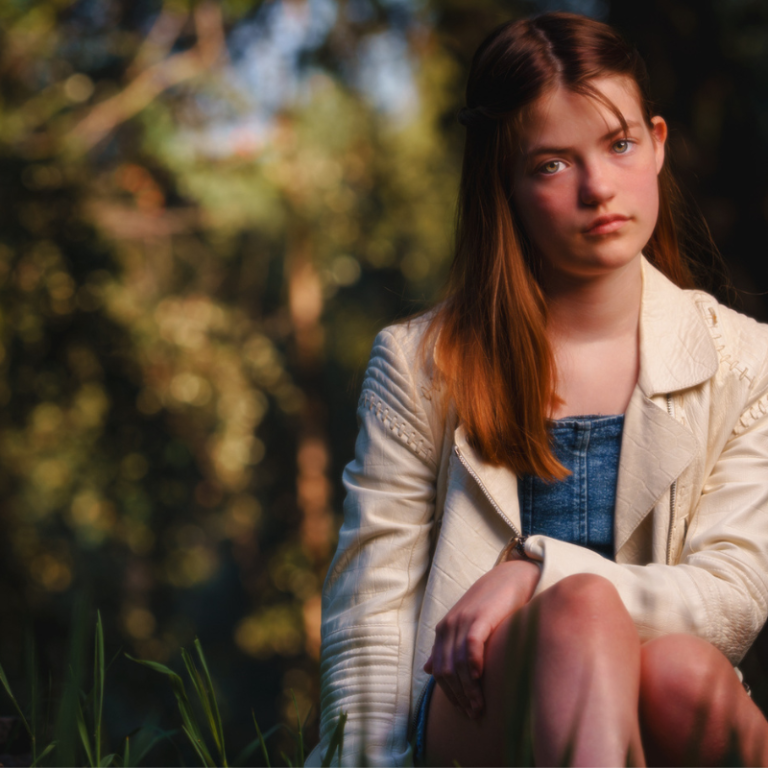

Singer-songwriter Emma Harner moved from the Midwest to Boston for school and has since built a loyal following with her introspective lyrics and intricate guitar work. She spoke to NYOTA about her love of math rock, the process of arranging her EP “Taking My Side,” and writing music that’s truly her own.
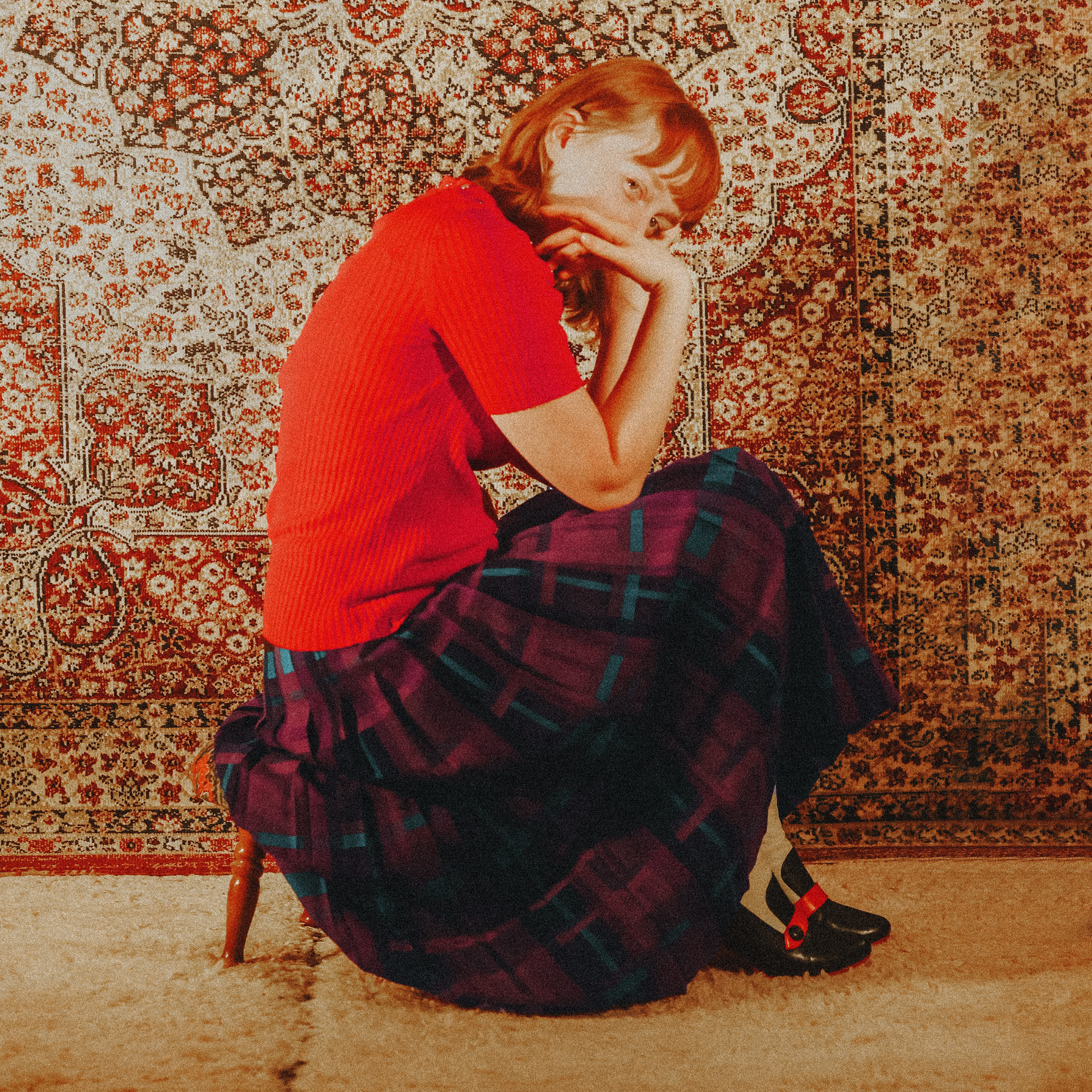
Who bought you your first instrument and sparked your interest in music?
My parents bought me my first instrument, which was a violin, at the tender age of 2 and a half! My preschool had a lovely teacher who would come by and teach the kids who signed up how to play violin in short 15-minute lessons. The first couple years were spent mostly figuring out how to hold it. I ended up taking lessons until I graduated high school! Violin and classical music in general are a big part of my music backstory because they instilled in me a deep love and appreciation for melody. Playing in symphony orchestras at the high school level exposed me to what’s possible when melodies build and interact with each other, which is something I am always thinking about when writing on guitar.
What’s the story behind your interest in math rock? It’s not a genre younger artists seem to be exploring as often.
To tell you the truth, I had a very influential ex that introduced me to Radiohead and math rock all in the same year. I fell in love with the sound of clashing half steps on guitar and odd time signatures. Both Radiohead and a lot of math that I listen to do a lot of building on melodic themes, which I mentioned before, is a technique that absolutely captivates me. A lot of my favorite math-y stuff is pretty recent, though—Hikes, Covet, Plini, and Delta Sleep, to name a few.
On Substack, you write about everything from your music listening habits to your new singles. What about writing on Substack appealed to you, and do new listeners find you through your posts?
The big American TikTok shutdown really put things into perspective for me. The thought of having the majority of my content and fans on short-form video platforms like TikTok and Instagram Reels felt wrong. Adding Substack to the rotation and continuing to increase the frequency of my posting on YouTube has helped me to combat the feeling of general volatility! So far, it’s been quite fun to write articles and blogs about guitar and songwriting, even if I’m not getting nearly as much attention over there as I am on the short-form platforms. I’m in it for the long haul!
Although you haven’t released an album yet, you released a beautiful EP, Taking My Side, over the summer. How did you go about figuring out the order of the songs that would create the best listening experience?
Thanks so much! The order of Taking My Side came from thinking that “False Alarm” sounded like a good opening. The guitar riff at the beginning feels like a call to action to me. “Yes Man” had to be towards the end because of its big energy section, and I always wanted to end the EP with “Again,” which feels like a very melancholic outro or afterthought. I love playing around with song order both in this way and on my set lists for live shows. It feels like a jigsaw puzzle I’m solving as I try to make everything flow together.
When listening to the EP (especially your song “Do It”), I could envision sprawling landscapes and a star-filled sky – there’s something that brings you back to nature. Does your midwestern upbringing influence your sound or the feelings you hope to evoke through your music?
There’s certainly something about the strings on “Do It” that open everything up in the most beautiful way. I can’t take credit for that performance or arrangement; it was Shaan Ramaprasad who did such an amazing job with the strings on that song. I think that my music always ties back somehow to a big, wide-open prairie, as it’s my favorite landscape and the one in which I grew up. “Do It” is sort of about magic, in that sometimes when I don’t understand how someone feels and can’t change it, I tend to romanticize it as something I can interact with but never fully parse. That feeling reminds me so much of nature and its beauty.
In “The Lake,” I love the way your voice emphasizes “call it” in the lines “I’ve been thinking ahead / Why don’t we call it what it is?” It instantly reminded me of when doctors call the time of death, except in your song’s case, it’s the time of death of a relationship. Are there common phrases or sayings that you like to play around with or look to for inspiration when writing?
I love to incorporate mundane things that one would say in conversation into my songs as a juxtaposition to my more poetic, hard-to-parse lyrics. There are many, many examples of that in the songs I’ve put out so far, but that’s a great one! Another that comes to mind is “Do It,” of course. In “Lifetimes,” which is definitely the most lyric-dense song on the EP, I take a break from the poetry briefly during the bridge with “Just call me when you can’t think something through / I’ve got a light.” I like how conversational it is and how it pulls you out of the moment of thinking, ‘What does she mean by that?’ and into, ‘So that’s what she means.’
Before the end of the year, you have numerous opportunities to play your songs live across the US and Europe. When performing live, do you like to do a more stripped-back version of some of these songs? How are you thinking through the arrangements for an audience?
As my project continues to grow, I’ll be able to bring more and more elements of the studio recordings with me to recreate on stage. An end-game ensemble for me would definitely include somebody making cool, abstract noises with guitar pedals. However, relative to that goal, I’m still at the beginning of my project. This first little headline tour for me will just be me and my guitar on stage, serenading everyone. I think this will always be a big element of my live shows, though, because I painstakingly arrange the guitar parts for these songs over months and months. They’re meant to sound complete with just guitar and voice, and it’s quite gratifying getting to show that off!
What advice do you have for aspiring musicians?
My best advice for aspiring musicians is to listen to yourself. I acquired the skills I have on guitar and with regard to songwriting by essentially locking myself in a room and tuning out the urge to “play like” anyone else. The world doesn’t need another one of your musical heroes; it needs one of you. I take a lot of inspiration from a lot of people, but at the end of the day, I am writing for myself. Only keep the stuff that gets stuck in your own head.
This story first ran in NYOTA’s Music issue. Read more from the issue here and purchase a print copy here.